

Bud Rot (Botrytis)
This guide is provided for educational purposes only and is intended for adults 21 years of age or older who are growing legally in their jurisdiction. Always follow product labels and local regulations.
Bud rot, caused by the fungal pathogen Botrytis cinerea, is one of the most damaging problems an outdoor or greenhouse cannabis grow can run into late in flower. It starts inside the bud, not on the surface, so it can be well established before you ever see it. When it appears, the priority is fast, clean removal, not waiting it out.
Start here if you are unsure what you are looking at:
If you suspect bud rot, handle buds gently and avoid shaking spores loose into the canopy or the room.
Quick ID
- What you see: a spot on a bud gone gray, brown, or dry and crispy while the flower around it still looks healthy. In its earliest stage it can look fluffy and white before darkening.
- Where it shows: your densest colas first, especially any with old leaf or stem damage tucked inside where moisture gets trapped.
- What confirms it: softness or mushiness that does not match the surrounding buds, a musty or off smell, and rotten material that crumbles or pulls apart like dust rather than staying intact.
- What it is often confused with: powdery mildew, a bud that is simply wet from rain or dew, and caterpillar or worm damage.
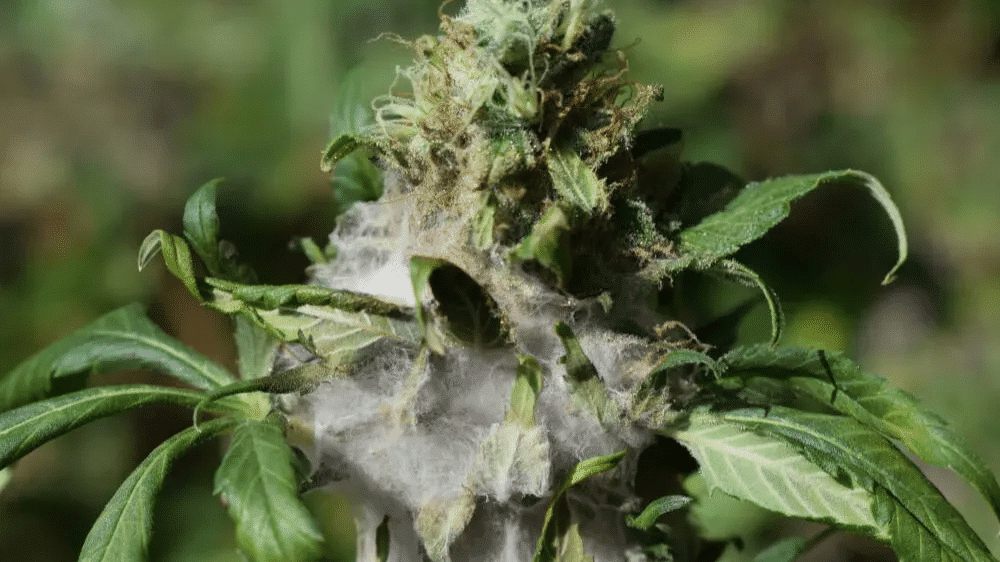
Bud rot (botrytis) on a cannabis cola

Bud rot symptoms up close

Another example of bud rot in a dense cola
Simple confirmation method:
- Gently squeeze suspect buds and compare firmness to their neighbors
- Pull at the discolored spot. True bud rot crumbles or pulls apart like dust
- Smell for anything musty or off
- If still unsure, crack the bud open. Gray or brown moldy material inside confirms it
Why Bud Rot Shows Up
Bud rot thrives wherever moisture gets trapped in dense flower and cannot dry out. Dense colas create their own humid microclimate on the inside, which is exactly what the fungus wants, whether you are growing outdoors, in a greenhouse, or indoors.
Common drivers
- Cool nights, dew, and rain, especially late in the season outdoors
- High humidity and poor airflow through the canopy
- Dense flowers that hold moisture, especially late in flower
- A dead leaf or old stem damage buried inside a cola, giving the fungus an entry point
- Condensation, wet leaves, or irrigation splash indoors and in greenhouses
When You Find It
There are two different jobs here, and they follow opposite rules on timing.
Preventive work (thinning, opening colas for airflow, trimming suspect but not-yet-rotten material) should wait for a dry, sunny day. A fresh cut is an open door for disease, and on a clear day it dries and calluses over on its own.
Active rot you can already see is the opposite. Cut it out the day you find it, whatever the weather. A visible rotten spot is throwing spores into your canopy right now, and it spreads fastest in the same damp weather you would want to wait out. Spread is the bigger risk. A slower-drying wound is the smaller one.
- Confirm it. Use the method above.
- Trace the cola down and cut at least an inch below the visible rot, into clean tissue.
- Do not let the blades touch the rotten part. Cut into the clean tissue below it.
- Wipe or dip your scissors in rubbing alcohol between every single cut. This is what keeps you from carrying spores to the next bud.
- Drop infected material straight into a bag. Do not shake it over the canopy or brush it off by hand, since that scatters spores everywhere. Get it out of the garden or grow space entirely.
- If you are forced to cut on a damp day, a thin dusting of plain cornstarch on the exposed stem works as a desiccant, drying the wound so disease cannot take hold. Keep it thin and off any flower you are keeping, then give it airflow.
Cutting the rot out with clean margin and good sanitation is usually enough to save the rest of the plant. The rotten material itself is not salvageable. Do not try to dry, cure, or smoke it, since moldy cannabis can carry health risks.
Do not do this:
- Do not wait for a sunny day to remove rot you can already see. That rule is for preventive trimming only
- Do not let your scissors touch the rotten tissue and then reuse them on a healthy bud
- Do not spray anything wet on the wound. Moisture is the one thing botrytis wants, so skip sprays entirely
- Do not shake or brush infected material back into the canopy
Scouting and Monitoring
Bud rot is often invisible until it is established. You are scouting for subtle changes in bud texture and smell, especially deep inside dense flowers.
Simple scouting routine
- Frequency: daily during the last few weeks of flowering, and especially after rain or during a cool, damp stretch
- Where to look: your densest colas first, especially any with old damage or a leaf buried inside
- What to track: any bud that feels softer or smells different than the ones around it
- Tools: your hands for the squeeze test, your nose, and scissors kept ready with alcohol nearby
Control Options
Bud rot management is mostly prevention and containment. Once it is inside the bud, you do not spray it away. Your leverage is environmental control and clean removal of infected material.
Low-risk first moves
- Open up colas for airflow on a dry day, ahead of the wettest part of your season
- Shake water off plants after storms rather than letting it sit in the canopy
- Avoid overhead watering late in flower
- Indoors or in a greenhouse, keep leaves dry and avoid chasing VPD by raising humidity while rot is active
If pressure is building
- Reduce overcrowding and remove weak interior sites that never fully dry
- If your trichomes are already mostly cloudy and bud rot is showing, that is often reason enough to harvest early rather than wait for peak color. See When to Harvest Cannabis for how bud rot weighs against trichome timing and weather.
- If bud rot is a recurring problem in your climate, choose genetics bred for resistance to it. Familiar Fruit is one of ours bred with strong resistance to botrytis.
- Use only labeled options appropriate for your crop stage and jurisdiction, if applicable
Note: We intentionally do not list specific products, mixes, or rates here. Always follow product labels and local regulations.
Often Confused With
- Bud rot vs powdery mildew: powdery mildew is a white, dusty coating on the surface that wipes off. Bud rot works from the inside out and the bud crumbles or feels mushy.
- Bud rot vs a simply wet bud: a bud that is just wet from rain or dew dries out and firms back up, with no musty smell and no lasting softness.
- Caterpillar or worm damage: chewed patches or visible frass, with an insect or its droppings present rather than a musty smell. See Caterpillars and Budworms if that looks closer to what you are seeing.
If you are not sure, use the diagnostic tool: What Pest Is This?
FAQ
Can you smoke bud rot?
No. Once a bud is infected, the moldy material itself is not salvageable and should not be dried, cured, or smoked. Cut it away with clean margin and the rest of the plant is usually fine.
Is bud rot the same as mold?
Bud rot is a specific type of mold, caused by the fungus Botrytis cinerea. Other molds like powdery mildew are also common on cannabis, but they behave differently. Powdery mildew stays on the surface and wipes off, while bud rot works from the inside out.
How do I know if it is bud rot and not just a wet bud?
Bud rot comes with softness or mushiness that does not match the surrounding buds, along with a musty smell that does not go away. A bud that is simply wet from rain or dew dries out and firms back up on its own.
Can I save a plant that has bud rot?
Often yes, if you catch it early. Cut the affected bud out with at least an inch of margin into clean tissue, sterilizing your scissors with rubbing alcohol between cuts so you do not spread spores to the rest of the plant.
Next Steps
Bud rot is best handled by staying ahead of moisture and catching it early through regular scouting. If you find it, cut it out the same day using clean tools, and let dry weather do the rest of the work on any preventive trimming.
For more on gray mold management in hemp, see Oregon State University Extension.