

Budworms on Cannabis: How to Identify and Get Rid of Them
This guide is for educational purposes and is intended for adults 21 and older growing legally in their jurisdiction. Always follow product labels and local regulations.
Budworms are one of the most destructive pests for outdoor and greenhouse growers, because they feed inside the buds where you can't see them. By the time the damage shows, a caterpillar has often already eaten flower from the inside and left droppings (called frass) that invite bud rot. This guide covers how to spot budworms early and what to do about them.
Quick ID
Not sure what you're looking at? Start here.
Not sure? Use the Pest ID Tool before treating.
If you find frass, assume there's a budworm in or near that bud until you've found and removed it. Frass is the most reliable early sign and almost always means feeding is still happening. Not sure? Check the Pest ID Tool.
How to Confirm Budworms
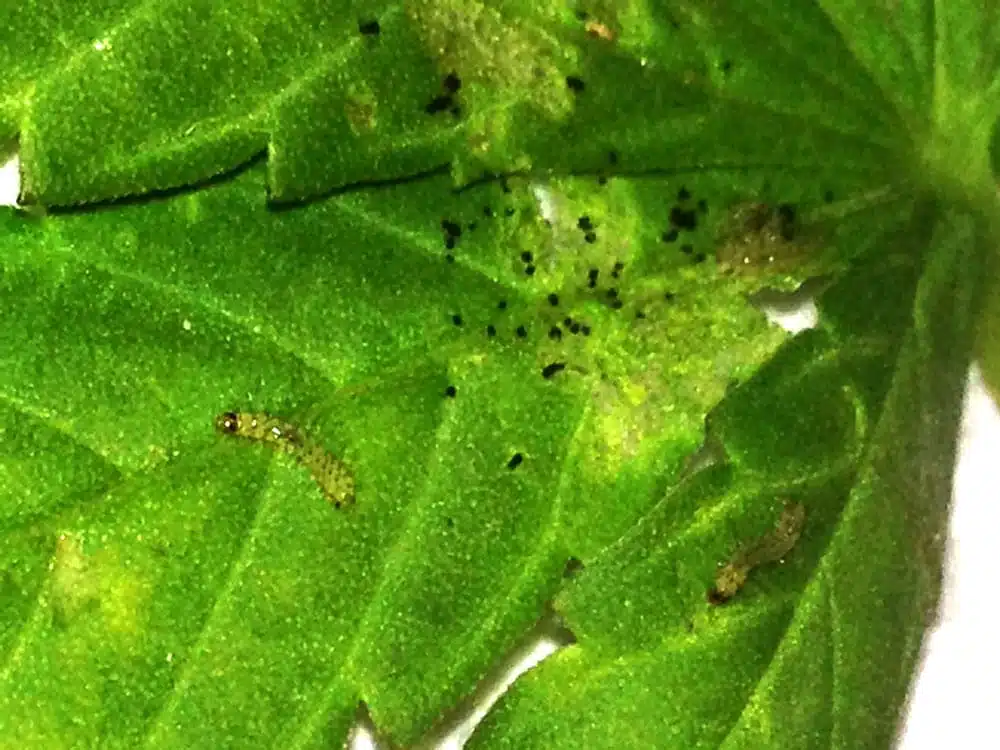
Surface damage can look like bud rot or physical injury. To be sure it's budworms, look for frass and the caterpillar itself:
- Look closely at the most developed buds in good light. Dark pellets or crumbs caught in the flower are frass.
- Watch for brown or wilted pistils in an otherwise healthy bud. Budworms kill small sections from the inside.
- Gently open a suspect bud and look for a caterpillar curled up inside. They're pale green to brown and blend in.
- Check for fine webbing, which budworms sometimes leave as they move around.


Where Budworms Come From
Budworms are the young (larvae) of certain moths. Knowing the cycle explains why prevention focuses on keeping the moths out, and why you scout hardest during flower.
The takeaway: by the time you see one caterpillar, more eggs may already be hatching elsewhere on the plant. Finding one means checking the whole plant and scouting daily for several days. Because they feed inside the bud, sprays reach them poorly, so removing them by hand and keeping moths out matter more.
Why outdoor and greenhouse grows are most at risk
Budworms come from moths, and moths need to reach your plants to lay eggs. Sealed indoor grows rarely see them unless eggs come in on new plants. Outdoor and greenhouse grows are exposed to moths, especially in late summer and early fall when buds are forming. That's why netting and sealing gaps is the best long-term prevention.
Why Budworms Show Up
Budworms are mostly about exposure and timing. You're most likely to see them when:
- You're growing outdoors or in a greenhouse in late summer or early fall
- There's nothing keeping moths out: open vents, doors, or gaps
- You haven't been checking buds often during flower
- Plants have dense, tight buds that hide the feeding
Nearby gardens, farms, and corn can raise the local moth population, which raises your odds. There's nothing wrong with how you're growing if budworms show up. It's an exposure problem, so the answer is checking often and keeping moths out, not changing how you feed or water.
First 24 Hours: What to Do Right Now
Budworms are about containing the problem, not spraying it. On day one, find the live caterpillars, remove the damaged flower, and head off the rot that usually follows.
- Confirm it. Look for frass and carefully open a suspect bud to find the caterpillar.
- Cut out the damage. Remove affected buds with clean scissors and throw them away from your grow right away.
- Check the whole plant. If you found one, there are probably more. Check every developed bud, top to bottom.
- Head off rot. Improve airflow and keep humidity steady. Damaged flower invites bud rot, which can spread fast.
- Keep checking. Look again every day for several days, focusing on the tops and densest buds.
- Don't ignore frass. It means a caterpillar is still feeding.
- Don't leave damaged buds in or under the plant.
- Don't assume it's just bud rot if there's frass. Budworms came first.
- Don't reach for a spray first. Caterpillars inside buds are hard to reach.
Control Options
The most reliable control is removing caterpillars and damaged buds the moment you find them, plus keeping moths out over the season. If you use a product, it has to be labeled for your crop and right for your growth stage.
Simple first moves
- Remove caterpillars by hand whenever you find them. Tedious, but it's the most effective single thing you can do.
- Cut out damaged buds and throw them away from your grow.
- Improve airflow and keep humidity steady to limit the bud rot that follows.
- Check buds daily during flower, when the risk is highest.
Helpful options (biological)
Bacillus thuringiensis (Bt) is a natural soil bacteria widely used against caterpillars. It only affects caterpillars and doesn't harm most helpful insects. It works when the caterpillar eats treated plant material, so it's most useful before they burrow deep into buds. Only use a version labeled for your crop and follow the label for timing.
Helpful insects like predatory and parasitic species can lower numbers outdoors over time, though they're a support measure, not a fast fix.
Never put anything on flowering buds unless you know it's safe for that stage.
Even organic products can leave residue or be harmful to breathe. When in doubt, don't spray. Rely on removing them by hand and keeping moths out.
Keeping moths out (the long game)
- Insect netting: fine netting over plants or greenhouse openings blocks moths from reaching buds to lay eggs. This is the single most effective way to prevent budworms.
- Seal gaps: close vents, doors, and openings during peak moth season, especially at night and in late summer.
- Reduce attractants: clear standing debris and manage your own space. You can't control everything nearby, but it helps.
Note: We don't list specific products, mixes, or rates here. Always follow product labels and local rules.
How Often to Check
Budworms are manageable when you catch them early and devastating when you miss them. Since they feed inside the bud, you're looking for frass and damaged pistils, not just bugs on leaves.
- Early flower: check 2 to 3 times a week, focusing on the tops and most developed buds
- Mid to late flower: check nearly every day during peak moth season, especially after warm nights
- What to track: frass, the number of damaged buds, and any new spots each time
- Tools: good light, gloves, clean scissors, and notes so you can tell if it's getting worse or holding steady
Pheromone traps for the local moths can warn you that adults are active before the eggs hatch, so you can tighten netting and checks ahead of time.
Often Confused With
| Pest / Issue | How to tell the difference |
|---|---|
| Bud rot | Brown or gray mushy flower that pulls apart into dust, with no droppings. Rot often follows budworms, so check for frass to tell which came first. |
| Physical damage | Tears or rub marks from wind or handling. No frass and no feeding inside the bud. |
| Normal fade | Color changes late in flower without chewed flower or droppings. |
| Nutrient or light issues | Color changes across leaves rather than chewed or hollowed buds. No bugs or frass. |
Still not sure? Use the Pest ID Tool.
Frequently Asked Questions
What are budworms on cannabis?
Budworms are caterpillars, the young of certain moths, that feed inside cannabis flowers and buds. They're most common in outdoor and greenhouse grows in late summer and early fall. Because they feed from inside the bud, the damage is often found late, after the caterpillar has already eaten flower and left droppings behind.
What does budworm frass look like?
Frass is caterpillar droppings. On cannabis it looks like dark pellets or crumbs caught in the flower, often near brown or damaged pistils. It's the most reliable early sign of budworms. If you see it, assume there's a live caterpillar in or near that bud until you've removed it.
How do I get rid of budworms?
Find and remove the caterpillars by hand, cut out and throw away damaged buds right away, and check the whole plant since finding one usually means there are more. Improve airflow to reduce the bud rot that follows. To prevent them, fine insect netting that keeps moths off your plants is the most effective long-term step. Sprays reach the caterpillars poorly because they feed inside the bud.
Can you smoke buds that had budworms?
Buds that budworms have fed on are usually ruined. The bigger concern is the bud rot that often grows in the damaged flower. Moldy or rotted flower should never be used. Cut out and throw away any affected buds, and check the flower around them carefully before keeping it.
Will budworms kill my cannabis plant?
Budworms rarely kill the whole plant, but they can ruin a big part of your harvest because they go straight for the flowers. The bud rot they trigger can spread and ruin even more. Catching them early and removing the damage quickly keeps the losses small.
How do I prevent budworms next season?
Prevention is mostly about keeping moths out and timing your checks. Use fine insect netting over plants or greenhouse openings to block moths from laying eggs, seal gaps during moth season, and check buds daily through flower in late summer and early fall. Pheromone traps can warn you when moths are active so you can tighten things up before the eggs hatch.
Are budworms only an outdoor problem?
Mostly, yes. Budworms come from moths that need to reach your plants, so sealed indoor grows rarely see them unless eggs arrive on new plants. If you grow indoors and find caterpillars, check anything you recently brought into the space.
Questions About Your Grow?
We've been growing since 2013. If you're dealing with a pest problem or just getting started, we're happy to help.
Pest ID Tool How to Grow Guide (919) 410-6945