
By Matt Spitzer, Triangle Seeds | Updated September 2026
If you’re thinking about growing at home for the first time, this is probably one of your first questions. The honest answer is that it depends on a few key factors, but none of them are complicated. Here’s what actually determines your timeline from seed to harvest.
The Short Answer
| Grow Type | Seed to Harvest | Total with Dry/Cure |
|---|---|---|
| Autoflower (indoor or outdoor) | 8–12 weeks | 10–16 weeks |
| Photoperiod (indoor) | 12–20 weeks | 15–24 weeks |
| Photoperiod (outdoor) | 4–7 months | 5–8 months |
Most cannabis plants take somewhere between 8 and 20 weeks from seed to harvest. Where you land depends on three things: whether you’re growing indoors or outdoors, whether you’re growing autoflower or photoperiod seeds, and how long you let your plants grow vegetatively before they flower.
I’ve been growing for over a decade, and the timeline is one of the most predictable parts of the whole process. Once you understand the growth stages, you’ll know almost exactly when your harvest is coming.
Table of Contents
- The Growth Stages
- Indoor vs. Outdoor
- Autoflower vs. Photoperiod
- What Can Affect Your Timeline
- Plan Your Grow
- Frequently Asked Questions
The Growth Stages (and How Long Each One Takes)
Every cannabis plant moves through the same basic stages regardless of seed type or environment. Here’s what to expect.
Germination: 1–7 Days
This is where it all starts. You plant your seed, keep it warm and moist, and wait for it to crack open and push out a taproot. Most healthy seeds germinate within 2–3 days, though some can take up to a week. If nothing has happened after 7 days, that seed probably isn’t viable.
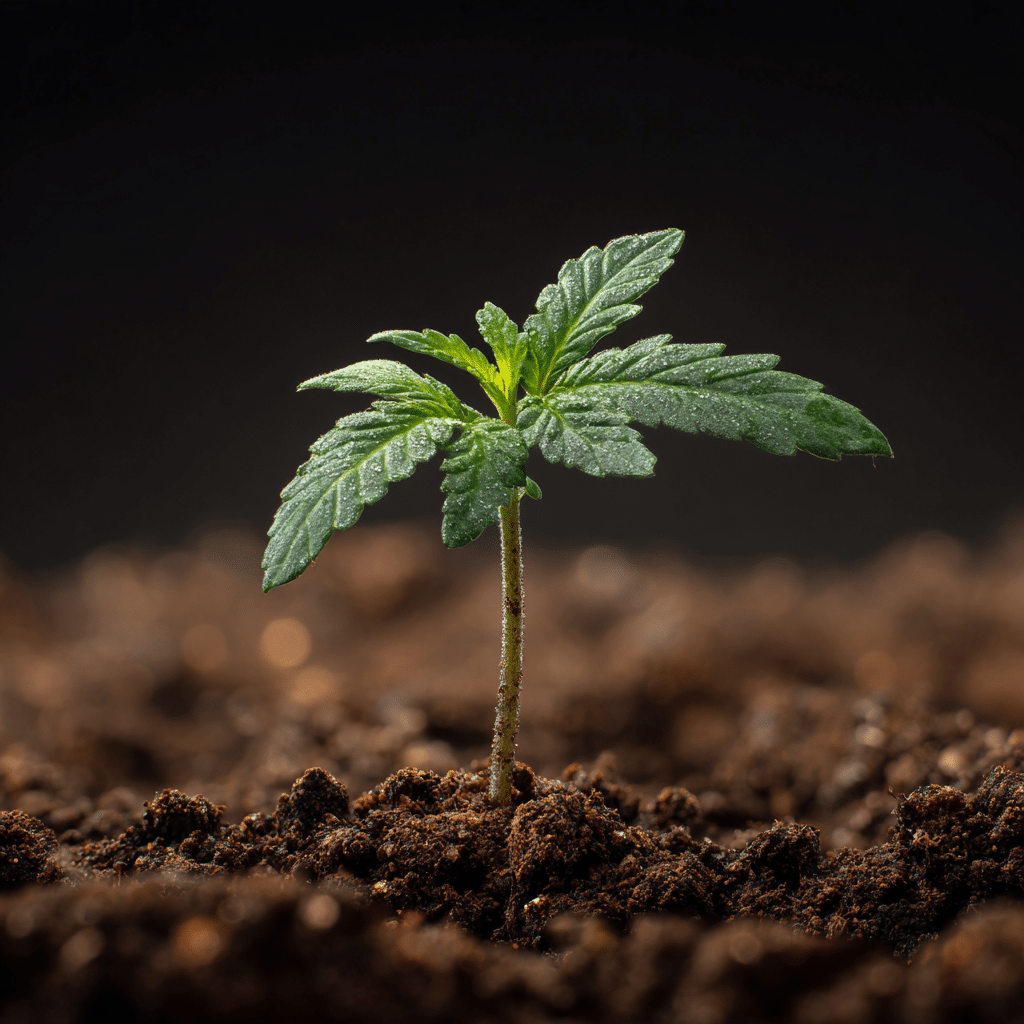
Seedling Stage: 1–3 Weeks
Once your seed sprouts and pushes above the soil, you’re in the seedling stage. The plant is small, fragile, and developing its first sets of true leaves. During this time your main job is to not overdo it: light watering, mild light, and patience. This stage typically lasts 1–3 weeks.
Vegetative Stage: 2–8+ Weeks
This is where things diverge depending on what you’re growing. During vegetative growth, your plant is focused entirely on building structure: stems, branches, and leaves. It’s not producing flowers yet.
For autoflower seeds, this stage is short and automatic. The plant will grow vegetatively for roughly 2–4 weeks before it transitions to flowering on its own, regardless of your light schedule. You don’t control this timeline. The genetics do.
For photoperiod seeds, you have full control. Indoors, your plants stay in vegetative growth as long as you keep them on a long light cycle (typically 18 hours of light, 6 hours of dark). You decide when to flip them to a 12/12 cycle to trigger flowering. Outdoors, the plant stays in vegetative growth through the long days of summer and naturally transitions to flower as daylight decreases in late summer and fall.
Most indoor growers veg their photoperiod plants for 4–8 weeks depending on how large they want them before flowering. A longer veg means a bigger plant with more potential bud sites, but also a longer total grow time.
Flowering Stage: 6–12 Weeks
This is the stage everyone’s waiting for. Flowering time is largely determined by genetics. Some strains finish in 7–8 weeks of flower, while others need 10–12 weeks to fully mature.
Autoflowers typically flower for 5–8 weeks. Combined with their short vegetative stage, this gives you a total seed-to-harvest time of roughly 8–12 weeks.
Photoperiod plants generally flower for 7–12 weeks depending on the strain. Add in the veg time and you’re looking at 12–20 weeks indoors. Outdoors, flowering is dictated by the seasons: you’ll plant in spring, grow through summer, and harvest in fall, usually around late September through November depending on your climate and latitude.
Drying and Curing: 2–4+ Weeks
A lot of growers forget to account for this. Your timeline doesn’t end at harvest. After you cut your plants, you’ll need to dry them for about 7–14 days in a cool, dark space with good airflow. After that, curing in jars for at least 2 weeks (and ideally 4+ weeks) is what takes your buds from decent to great. Curing improves smoothness, flavor, and overall quality. Don’t skip it and don’t rush it.
Indoor vs. Outdoor: How the Environment Affects Your Timeline
Indoor Growing
The biggest advantage of growing indoors is control. You set the light schedule, which means you decide when flowering starts with photoperiod seeds. This lets you plan your grow timeline with precision.
A typical indoor grow with photoperiod seeds looks like this: 1 week for germination and early seedling growth, 4–6 weeks of vegetative growth, 8–10 weeks of flower, and 2–4 weeks of drying and curing. That puts you at roughly 15–21 weeks from seed to cured flower.
With autoflower seeds indoors, you’re looking at a shorter window: 8–12 weeks from seed to harvest, plus drying and curing. Total time is closer to 10–16 weeks.
Outdoor Growing
Outdoor grows are tied to the seasons. You plant in spring after the last frost, your plants grow vegetatively through the long days of summer, and they begin to flower naturally as daylight decreases in late summer. Harvest usually happens between late September and early November depending on your strain and location.
For photoperiod seeds outdoors, you’re looking at roughly 5–7 months from planting to harvest. Autoflower seeds grown outdoors can be harvested in as little as 10–12 weeks regardless of season, which is why some growers run multiple rounds of autos in a single outdoor season.
Outdoor grows don’t give you the same control over timing as indoor setups. Weather, pests, and light pollution can all affect your timeline. But sunlight is free, and outdoor plants can grow large and produce significant yields without the electricity costs of an indoor setup.
Autoflower vs. Photoperiod: The Timeline Difference at a Glance
| Autoflower | Photoperiod (Indoor) | Photoperiod (Outdoor) | |
|---|---|---|---|
| Vegetative stage | 2–4 weeks (automatic) | 4–8 weeks (you decide) | Spring through midsummer |
| Flowering stage | 5–8 weeks | 7–12 weeks | Late summer through fall |
| Seed to harvest | 8–12 weeks | 12–20 weeks | 5–7 months |
| Total with dry/cure | 10–16 weeks | 15–24 weeks | 5–8 months |
The shorter timeline of autoflowers makes them appealing, especially for new growers who want results sooner. Photoperiod plants give you more flexibility and generally produce larger yields because they have more time to develop. For help choosing between them, see our autoflower vs. photoperiod guide.
What Can Make Your Grow Take Longer (or Shorter)?
A few real-world factors can shift your timeline in either direction.
Strain genetics are the biggest variable. Some strains are bred to finish faster than others and this is baked into the plant’s DNA. When you’re choosing seeds, the estimated flowering time is a good reference point.
Light intensity and schedule matter indoors. More consistent, higher-quality light helps plants develop during vegetative growth. With photoperiod plants, the sooner you flip to 12/12, the sooner you harvest, though with a smaller plant.
Growing conditions like temperature, humidity, and nutrient management can slow things down if they’re off. A stressed plant may stall or take longer to mature. Spend time with your plants. The more you observe, the faster you catch problems before they set you back.
Growing medium can also play a role. Hydroponic setups can speed up vegetative growth compared to soil because nutrients go directly to the roots. But for most home growers, soil works great and the timeline difference is minimal. See our fertilizer guide for how to feed at each stage.
Plan Your Grow Before You Plant
Set realistic expectations before you start. If you’re growing photoperiod seeds indoors, plan for roughly 4–5 months from seed to cured bud. If you’re running autoflowers, you can cut that closer to 3 months. Outdoor growers should work backward from their expected first frost date to determine when to plant.
Knowing the timeline takes the guesswork out and lets you focus on what actually matters: spending time with your plants and dialing in the basics.
If you have questions about timelines for any of our strains, text or call us at (919) 410-6945. We’re happy to talk through your grow plan.
Frequently Asked Questions
How long does it take to grow autoflower cannabis from seed to harvest? Most autoflower strains take 8–12 weeks from seed to harvest. They transition from vegetative growth to flowering automatically, without needing a change in light schedule. Add another 2–4 weeks for drying and curing and you’re looking at roughly 10–16 weeks total.
How long does it take to grow photoperiod cannabis from seed to harvest? Indoor photoperiod grows typically take 12–20 weeks from seed to harvest, depending on how long you let your plants grow vegetatively before flipping to flower. Outdoors, photoperiod plants follow the natural seasons, planted in spring and harvested in fall: 5–7 months. Drying and curing adds another 2–4 weeks.
Does it take longer to grow cannabis indoors or outdoors? Outdoor grows generally take longer because you’re working within the natural growing season. Indoor grows give you full control of the light schedule, so you can start flowering whenever you choose. Outdoor plants often grow larger and can produce bigger yields because they have access to natural sunlight for extended periods.
What’s the fastest way to grow cannabis from seed? Autoflower seeds grown indoors offer the fastest path to harvest, typically 8–12 weeks from seed. If speed is your priority, choose an autoflower strain and provide consistent light (18–20 hours per day) with proper watering and nutrition.
Why does drying and curing take so long? Drying removes excess moisture from harvested buds, which typically takes 7–14 days. Curing is a slower process where buds are stored in sealed jars and burped periodically to allow remaining moisture to equalize and chlorophyll to break down. Proper curing improves smoothness, taste, and overall quality. Rushing this step is one of the most common mistakes new growers make.
Can I speed up the flowering stage? Not significantly. Flowering time is primarily determined by genetics. You can support healthy flowering by providing the right light intensity, maintaining proper temperature and humidity, and keeping nutrients dialed in, but you can’t rush the biology. Harvesting too early results in less developed buds.
About the Author

Matt, Co-Founder of Triangle Seeds — Matt has been growing plants commercially since 2013 alongside childhood friend and co-founder Chase. Over more than a decade, Triangle Seeds has produced and sold over a million seeds to home growers and hemp farmers across the US. We ship seeds nationwide. Call/text (919) 410-6945 with any questions. Learn more
We have a video series with cannabis content creator Catherine Goldberg, aka Senior Savvy Cannabis, where we guide her through her first indoor grow. If you are a new grower, you might find the videos helpful. Watch the grow videos →