
A Guide to Vermont Home Grow Laws
Last updated: March 2026
Vermont home grow laws allow adults 21 and older to cultivate up to two mature cannabis plants and four immature plants per dwelling unit – and any cannabis you harvest does not count toward the one-ounce possession limit, as long as it is stored indoors on the same property.
Disclaimer: Cannabis laws change. This post reflects our best understanding of Vermont law as of early 2026. Always verify current rules with the Vermont Cannabis Control Board before making any decisions.
Table of Contents
- The Short Version
- Who Can Grow
- How Many Plants
- Where You Can Grow
- Security and Visibility Requirements
- Storing Your Harvest
- Ownership and Written Consent Requirement
- Renters and Landlords
- Medical Patient Limits
- Outdoor Growing in Vermont
- Penalties for Going Over the Limit
- Ready to Start Growing?
- Frequently Asked Questions
The Short Version
| Rule | Details |
|---|---|
| Legal? | Yes, since July 1, 2018 |
| Who can grow | Adults 21+ |
| Plant limit | 2 mature + 4 immature per dwelling unit |
| Household cap | Per dwelling unit regardless of number of adults |
| Registration required | No |
| Visibility | Screened from public view |
| Access | Limited to cultivator and adults 21+ with permission |
| Harvest storage | Must be stored indoors on property; does not count toward 1 oz limit |
| Written consent | Required if growing on property you do not own |
| Statute | 18 V.S.A. § 4230e |
Who Can Grow
Any adult 21 or older may grow cannabis at home in Vermont for personal use. No registration, permit, or card is required. Vermont’s home cultivation right took effect on July 1, 2018, when the state became the first in the country to legalize adult-use cannabis through the legislature rather than by ballot initiative. The recreational sales framework followed in 2020 and stores opened in October 2022.
How Many Plants
Vermont law caps home cultivation at two mature cannabis plants and four immature cannabis plants per dwelling unit, under 18 V.S.A. § 4230e. The statute is explicit: the limit applies to the entire dwelling unit regardless of how many adults 21 or older reside there.
One adult or four adults sharing a home have the same ceiling: two mature plants and four immature plants. This is a household cap, not a per-person limit.
Vermont’s statute defines “dwelling unit” as a building or part of a building used as a primary home, residence, or sleeping place by one or more persons who maintain a household. The limit applies to that dwelling unit as a whole.
Where You Can Grow
Cultivation must take place on property lawfully in the cultivator’s possession, or on property where the cultivator has written consent from the person in lawful possession. Both indoor and outdoor grows are permitted under state law.
Plants must be in an area screened from public view, and access must be limited to the cultivator and other adults who are at least 21 years old and have the cultivator’s permission.
Vermont does not require a locked enclosure in the statute itself – the screening from public view and access limitation are the core requirements. That said, reasonable precautions to prevent unauthorized access are also required for stored harvested cannabis.
Security and Visibility Requirements
Under 18 V.S.A. § 4230e, plants must be:
- Screened from public view
- In an area where access is limited to the cultivator and adults 21+ with permission
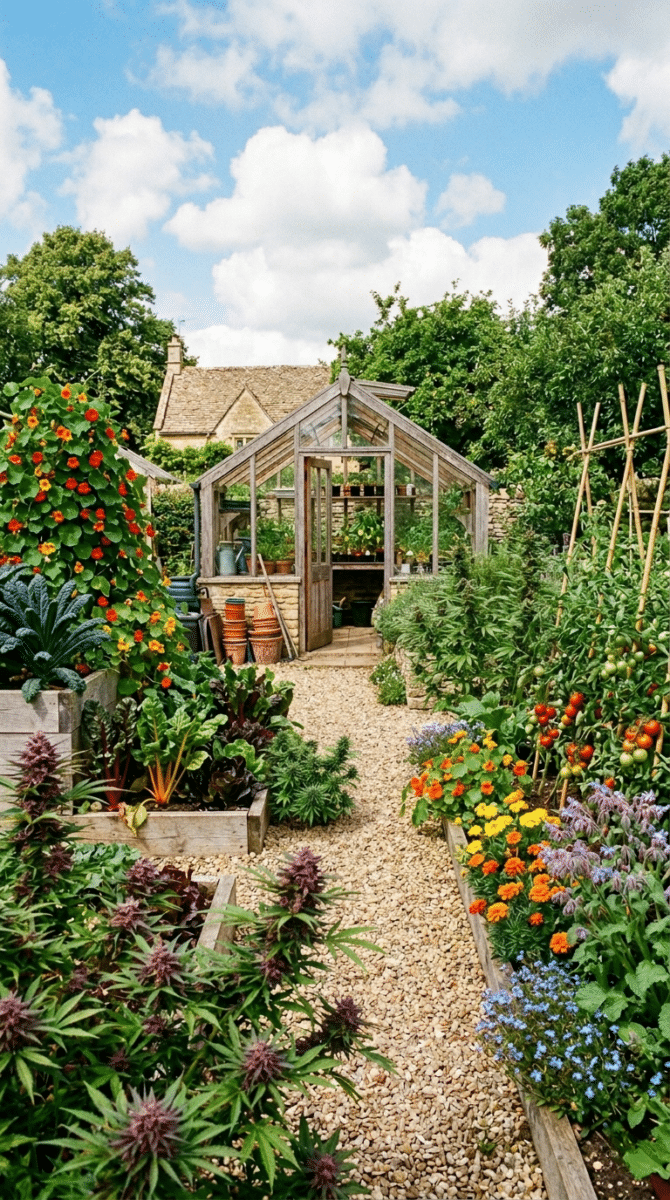
There is no specific mandate in the state statute for a locked enclosure, which distinguishes Vermont from most other states in this series. A fenced outdoor garden that is not visible from the road, sidewalk, or neighboring properties and is accessible only to authorized adults satisfies the statutory requirements as written.
For indoor grows, a dedicated grow space with restricted access satisfies both requirements.
Storing Your Harvest
Vermont includes a notable benefit that most states do not: cannabis that you grow and harvest yourself does not count toward the standard one-ounce possession limit, as long as it is stored in an indoor facility on the same property where it was cultivated.
This means you can harvest more than one ounce from your two mature plants and keep it at home legally, provided it stays stored indoors on the property and you take reasonable precautions to prevent unauthorized access. This makes Vermont’s two-plant limit more practical than it might initially appear – the harvest from two well-grown outdoor plants in Vermont’s climate can yield a meaningful personal supply.
Ownership and Written Consent Requirement
Vermont statute requires that cultivation take place on property lawfully in the cultivator’s possession or with the written consent of the person in lawful possession of the property. A verbal agreement from a landlord or property owner is not sufficient – the written consent requirement is part of the statute.
For renters, this means getting written permission from your landlord before starting any grow, whether indoor or outdoor.
Renters and Landlords
Vermont law expressly allows landlords to ban the possession and use of cannabis in lease agreements. If your lease includes such a prohibition, that ban is enforceable regardless of what state law permits.
Because Vermont statute also requires written consent from the property owner for cultivation on property you do not own, a lease that is silent on cannabis does not automatically authorize a grow. Get written permission before starting.
Medical Patient Limits
Registered medical cannabis patients in Vermont are permitted to grow more than recreational adults: up to two mature plants and seven immature plants, for a total of nine plants. This is per the medical cannabis program under Vermont’s Registry.
Medical patients must be registered through Vermont’s Medical Cannabis Registry, managed by the Department of Public Safety. The two-mature-plant limit for medical patients mirrors the recreational limit for mature plants, but the seven-immature allowance gives registered patients more flexibility in maintaining a continuous grow cycle.
Outdoor Growing in Vermont
Vermont spans USDA hardiness zones 3b through 6a. The Champlain Valley and lower elevations in southwestern Vermont are in zones 5 and 6 – the most favorable for outdoor cannabis. Higher elevations in the Green Mountains and the Northeast Kingdom can be in zones 4 and even 3b in the coldest pockets, with significantly shorter growing seasons.
The outdoor cannabis season in Vermont is one of the shorter ones in this series. In the Champlain Valley, the last spring frost is typically in late April to mid-May, and the first fall frost often arrives in late September or early October. That gives growers roughly a 140-160 day season at lower elevations – sufficient for many photoperiod strains, but with less buffer than states further south.
In the Northeast Kingdom and at elevation, the season can be under 120 days. Autoflowering varieties that complete in 70-80 days are a smart choice for growers in those areas. Even in the more temperate parts of the state, strains that finish in early to mid-September are safer than late-season varieties that might encounter frost before completing their cycle.
Vermont’s humid late summers can promote mold in dense-canopied strains. Genetics with good mold and botrytis resistance are worth prioritizing for outdoor grows here.
Penalties for Going Over the Limit
Violations of the visibility and access requirements in 18 V.S.A. § 4230e(b) carry civil penalties. The statute specifies civil fines on a first and subsequent offense basis for those location and access violations.
Growing more plants than the two mature and four immature limit is punished under 18 V.S.A. § 4230, Vermont’s general cannabis manufacture statute. Excess cultivation above the home grow limit is treated as unlawful manufacture and carries criminal penalties that scale with the quantity involved.
Ready to Start Growing?
Vermont’s two-mature-plant cap is among the most restrictive in the country for recreational growers, but the no-possession-limit benefit for stored homegrown cannabis is a genuine advantage. Two well-grown plants – particularly large outdoor plants in the Champlain Valley – can produce a substantial harvest that stays fully legal as long as it is stored indoors on the property. Choosing genetics that are well-suited to Vermont’s short, cool season is the most important decision a home grower here can make.
Browse Our Strain Catalog | How to Grow Guide | USDA Zone Map
Ready to start your grow? Browse our Vermont cannabis seeds to find feminized and autoflower varieties that ship to your door.
Frequently Asked Questions
Is home growing legal in Vermont?
Yes. Adults 21 and older have been able to grow cannabis at home in Vermont since July 1, 2018, under 18 V.S.A. § 4230e. Vermont was the first state to legalize adult-use cannabis through the legislature rather than a ballot initiative.
How many plants can I grow at home in Vermont?
Two mature plants and four immature plants per dwelling unit. The limit applies to the entire household regardless of how many adults live there.
Does the plant limit increase if multiple adults share the same home in Vermont?
No. The limit is two mature and four immature plants per dwelling unit – it does not increase based on how many adults share the address.
Does my homegrown cannabis count toward the one-ounce possession limit?
No. Cannabis you harvest from your home plants does not count toward the one-ounce possession limit, as long as it is stored indoors on the same property where it was grown and you take reasonable precautions to prevent unauthorized access.
Do I need to keep plants in a locked space in Vermont?
The statute requires that plants be screened from public view and that access be limited to the cultivator and adults 21+ with permission. There is no explicit locked enclosure requirement in the state statute, though reasonable precautions are required for stored cannabis.
Can I grow cannabis outdoors in Vermont?
Yes. Outdoor cultivation is permitted as long as plants are screened from public view and access is limited to authorized adults.
Do I need written consent to grow in a rental property in Vermont?
Yes. Vermont law requires written consent from the property owner or person in lawful possession if you are cultivating on property you do not own. A verbal agreement is not sufficient.
Can my landlord ban home growing in Vermont?
Yes. Vermont law allows landlords to ban the possession and use of cannabis in lease agreements. If your lease includes such a prohibition, it is enforceable.
Can medical cannabis patients grow more plants in Vermont?
Yes. Registered medical patients may grow up to two mature plants and seven immature plants, for a total of nine plants.
Where can I buy cannabis seeds in Vermont? Triangle Seeds ships feminized cannabis seeds to Vermont and all 50 states. Check out our cannabis seeds for Vermont growers. Browse our seed catalog to find the right genetics for your grow.
About the Author

Matt, Co-Founder, Triangle Seeds – Matt has been growing plants commercially since 2013, starting with Endless Sun Farms before co-founding Triangle Seeds in 2017 alongside childhood friend Chase. Over more than a decade, Triangle Seeds has produced and sold over a million seeds to home growers, homesteaders, and hemp farmers across the United States. Matt and Chase manage seed selection personally, only carrying genetics we truly stand behind. Learn more about Triangle Seeds.