
What Actually Predicts How a Strain Will Affect You
Last updated: February 2026
Summary: THC percentage is one of the most visible numbers in cannabis marketing, but it’s also one of the least reliable predictors of how a strain will actually hit you. Experienced growers know this. Here’s why.
Table of Contents
- The Number on the Label
- What Growers Actually See
- Why the Percentage Is Often Misleading
- Terpenes: The Missing Piece
- Your Body Changes Everything
- What to Look For Instead
- The Bottom Line
- Frequently Asked Questions
The Number on the Label
Walk into most dispensaries or browse most seed banks and the first thing you notice is the THC percentage. It’s front and center, often the biggest number on the packaging. A strain at 28% feels premium. One at 18% feels entry-level. The implication is simple: higher number means stronger effect.
The problem is that’s not how cannabis actually works.
What Growers Actually See
Ask any cultivator who has grown a wide range of genetics and they’ll tell you the same thing. A 20% strain will often produce a noticeably stronger and more complex effect than a 30% strain grown under identical conditions. This isn’t anecdotal fringe opinion. It’s something experienced growers observe consistently, and it’s one of those things that tends to surprise new consumers when they first hear it.
The THC number measures one thing: the concentration of tetrahydrocannabinolic acid relative to the total weight of the sample. It says nothing about how that THC interacts with the hundreds of other compounds in the plant, and it says nothing about how your specific body will process it.
Why the Percentage Is Often Misleading
There are a few reasons the percentage on a label should be taken with skepticism.
First, testing results vary widely depending on the lab, the sample size, and when in the harvest window the flower was tested. A single bud tested from the top of a plant will test differently than one pulled from a lower branch. Some testing methods are more accurate than others, and some labs have been caught inflating numbers to stay competitive with retailers who want high-percentage products.
Second, THC degrades over time. A strain tested at 28% at harvest might be significantly lower by the time it reaches a consumer, depending on how it was dried, cured, stored, and handled. The number you see often reflects peak conditions that don’t account for the journey from plant to package.
Third, and most importantly, THC concentration alone doesn’t capture what makes one strain hit harder than another. The effect of cannabis is not determined by a single compound working in isolation.
Terpenes: The Missing Piece
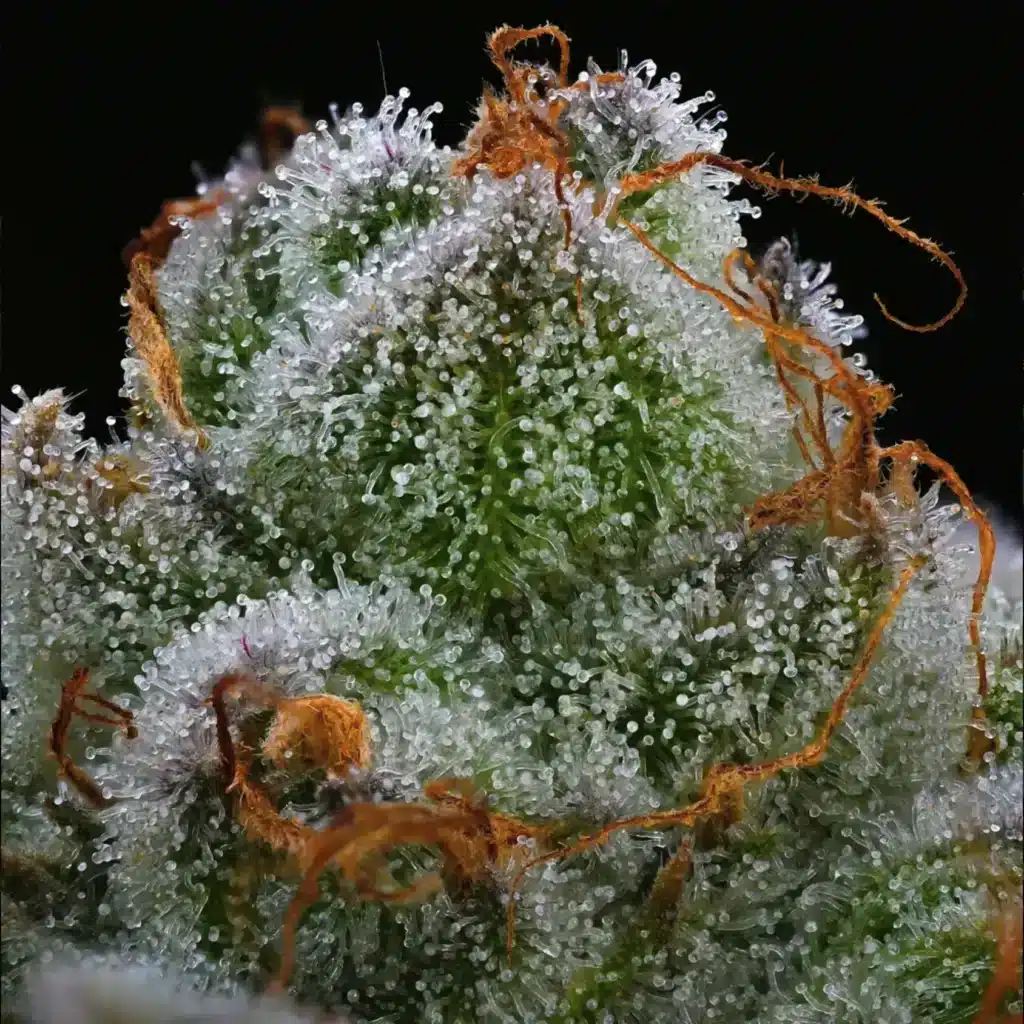
Terpenes are the aromatic compounds responsible for the way cannabis smells and tastes, and they play a much larger role in the overall experience than most consumers realize. Myrcene, limonene, caryophyllene, linalool, pinene – these compounds and dozens more interact with THC and with your body’s own receptor systems in ways that can amplify, soften, redirect, or fundamentally change the nature of the effect.
This is sometimes called the entourage effect. The idea is that cannabis compounds work together, and the whole plant produces something different than any single compound would produce on its own. A strain with 20% THC and a rich, complex terpene profile will often feel more potent and more interesting than a 30% strain that was bred for yield and THC content at the expense of everything else.
When you smell a strain and something about it immediately catches your attention – that sharp citrus note, that deep earthy musk, that sweet floral quality – you’re actually gathering useful information about how it might affect you. Your nose is doing something meaningful.
Your Body Changes Everything
Beyond the plant itself, there’s the other half of the equation: you.
Every person has an endocannabinoid system, a network of receptors found throughout the brain, nervous system, and immune system that cannabis compounds interact with. The density, sensitivity, and distribution of those receptors varies from person to person based on genetics, age, body composition, stress levels, and prior cannabis use.
This is why one person can consume the same amount of the same strain as their friend and have a completely different experience. It’s not tolerance alone, though tolerance matters. It’s that the underlying biology is genuinely different between individuals, and it’s different in the same individual from one day to the next.
What this means practically is that the only reliable way to find what works best for you is to try a variety of different strains and pay attention. Not just to potency, but to the character of the effect. Does it feel energizing or calming? Does it help with focus or send your mind somewhere else entirely? Does the body sensation feel heavy or light? These are the questions that actually help you find the right strain for your purpose.
(For a much deeper look at how your endocannabinoid system shapes your experience, read our companion post: Why the Same Strain Hits Everyone Differently.)
What to Look For Instead
Rather than leading with THC percentage, here are the things worth paying more attention to:
The terpene profile, if that information is available. Strains with a sweet, fruity, or musky quality often have higher myrcene content, which tends toward a more sedating, body-heavy effect. Citrusy, bright strains often have more limonene, which tends toward something more uplifting.
The lineage and genetics. Knowing a strain’s parent plants tells you something about what to expect, especially if you’ve grown or consumed those parents before.
Your own history with similar strains. If you’ve had good experiences with a particular style of effect, that’s more useful information than a lab number.
And perhaps most importantly: variety. Try different strains. Pay attention to what you actually notice, not what the packaging suggests you should notice.
The Bottom Line
THC percentage became the dominant marketing metric because it’s simple and easy to put on a label. But cannabis is not simple, and the number doesn’t tell you what you actually want to know.
Experienced growers and longtime consumers have known this for years. A thoughtfully bred 18% strain with depth and complexity will outperform a high-test 30% strain grown purely for numbers, often by a significant margin.
Browse our strain catalog and use the descriptions, lineage, and effect profiles as your guide rather than leading with the percentage. The number is one data point. It’s just not the most important one.
Frequently Asked Questions
Does higher THC always mean a stronger effect?
Not at all. THC percentage measures the concentration of one compound, but the effect of a strain is shaped by hundreds of compounds working together, including terpenes and other cannabinoids like CBD, CBG, and CBN. A strain with a rich terpene profile at 18-20% THC will frequently produce a more intense and complex experience than a stripped-down 30% strain. Most experienced consumers and growers have confirmed this firsthand.
Why do some high-THC strains feel weak?
Several reasons. The testing number may reflect peak conditions that changed by the time the flower reached you. The strain may have been bred to produce high THC at the expense of the terpene and minor cannabinoid content that fills out the experience. Or your specific endocannabinoid system simply doesn’t respond to that particular combination of compounds the same way someone else’s does.
What is the entourage effect?
The entourage effect refers to the way cannabis compounds interact with each other and with your body’s receptors to produce effects that are different from, and often greater than, what any single compound would produce alone. Terpenes, CBD, CBG, and other minor cannabinoids all modulate how THC affects you. This is why whole-plant cannabis often feels different from isolated THC.
Should I completely ignore THC percentage when choosing a strain?
Not completely. For new growers and new consumers especially, starting with a lower percentage strain and building up is a reasonable approach to managing your experience. The point isn’t that the number is meaningless, just that it shouldn’t be the only thing you’re looking at, and it definitely shouldn’t be treated as the most reliable predictor of potency or quality.
How do I find the right strain for me?
Try a variety of strains and pay close attention to the character of each experience, not just the intensity. Keep notes if that helps. Look at terpene profiles when available, pay attention to lineage, and use your own history with similar strains as a guide. There’s no shortcut to knowing your own chemistry — exploration is the process.
About the Author

Matt, Co-Founder of Triangle Hemp – Matt has been growing plants commercially since 2013, starting with Endless Sun Farms before co-founding Triangle Hemp in 2017 alongside childhood friend Chase. Over more than a decade, Triangle Hemp has produced and sold over a million seeds to home growers, homesteaders, and hemp farmers across the United States. Matt and Chase manage seed selection person
We have a video series with cannabis content creator Catherine Goldberg, aka Senior Savvy Cannabis, where we guide her through her first indoor grow. If you are a new grower, you might find the videos helpful. Watch the grow videos →