
A Guide to California’s Home Cultivation Laws
Last updated: March 2026
Summary: California adults 21 and older can legally grow up to six cannabis plants at home for personal use under Proposition 64. The state rules are fairly straightforward, but local ordinances can add restrictions — particularly around outdoor growing. Here’s what you need to know.
Disclaimer: Cannabis laws change. This post reflects our best understanding of California law as of early 2026. Always verify current rules with the California Department of Cannabis Control and your local city or county before you grow.
Table of Contents
- The Short Version
- Who Can Grow
- How Many Plants
- Where You Can Grow
- The Local Ordinance Factor
- Tagging and Security Requirements
- Indoor vs Outdoor vs Greenhouse
- Penalties for Going Over the Limit
- Ready to Start Growing?
- Frequently Asked Questions
The Short Version
| Rule | Detail |
|---|---|
| Legal for adults? | Yes, 21 and older |
| Plant limit | 6 plants per residence |
| Indoor growing | Always allowed (state law protects this) |
| Outdoor growing | Allowed by state law, but local ordinances may restrict or ban it |
| Greenhouse | Allowed |
| Visible from public? | Not permitted |
| Must be secured? | Yes, locked and inaccessible to minors |
| Plant tagging required? | No state requirement |
| Local permits required? | Depends on your city or county |
| Landlord restrictions? | Yes, landlords can prohibit cultivation |
Who Can Grow
Any California resident 21 years of age or older can legally grow cannabis at home for personal use under Proposition 64, the Adult Use of Marijuana Act passed by voters in November 2016. No medical card or special permit is required at the state level, though some local jurisdictions have added their own requirements.
If you rent, check your lease. Landlords in California have the right to prohibit cannabis cultivation on their properties.
How Many Plants
Adults can grow up to six plants per residence for personal use. The six-plant limit applies to the residence, not to each individual. A household of two or more adults still shares a single six-plant limit.
The limit of six plants applies to each residence rather than each individual, meaning that you and your roommate may not each have six plants if you live under the same roof.
Where You Can Grow
State law requires that plants be grown on your own private property and not be visible to the public. Beyond that, plants must be in a locked, secure space inaccessible to minors.
Plants must be cultivated indoors or in a fully enclosed, secure structure on your property, and never visible to the public. Measures must be in place to prevent unauthorized access, especially by minors.
This means an open backyard visible from the street or a neighboring property does not meet the requirement. A fenced, enclosed yard, a locked outbuilding, a greenhouse, or an indoor grow space all work as long as the visibility and access conditions are met.
The Local Ordinance Factor
This is where California gets more complicated than most states. While state law allows six plants per residence, local jurisdictions may “reasonably regulate” personal cannabis gardens, including requiring them to be grown indoors.
The key protection for home growers is this: local governments cannot outright ban indoor cultivation of six plants within a private residence or a locked accessory structure. However, local governments can regulate or prohibit all outdoor cultivation.
In practical terms this means:
- Indoor growing of up to six plants is protected statewide and cannot be banned by local government
- Outdoor growing is subject to local rules and may be restricted or banned entirely in your city or county
- Some cities require permits for home cultivation even within the six-plant limit
- Local rules vary significantly — what’s allowed in one city may not be allowed in the next
Before you set up an outdoor grow, check your city or county’s municipal code or contact your local government directly to find out what applies in your area.
Tagging and Security Requirements
California state law does not require individual plant tags the way Virginia does. However, plants must be in a secured, locked space. Cultivation must be conducted in a designated cultivation area separately secured and locked from all other uses in the residence. Plants must be reasonably secured from theft and from access by minors or other unauthorized persons. Cannabis must not be perceptible from the exterior of the private residence.
Indoor vs Outdoor vs Greenhouse
All three are permitted under state law, with the caveats above around local ordinances.
Indoor growing is the most legally straightforward option in California. It’s protected by state law regardless of what local ordinances say, and it satisfies the visibility and security requirements without modifications to an outdoor space. It also gives you full control over your growing environment.
Outdoor growing is allowed by state law but is the approach most affected by local restrictions. Before planting outdoors, verify that your city or county permits it. Where it is allowed, California’s climate is exceptional for cannabis — much of the state has a long, warm growing season well suited to both photoperiod and autoflower varieties.
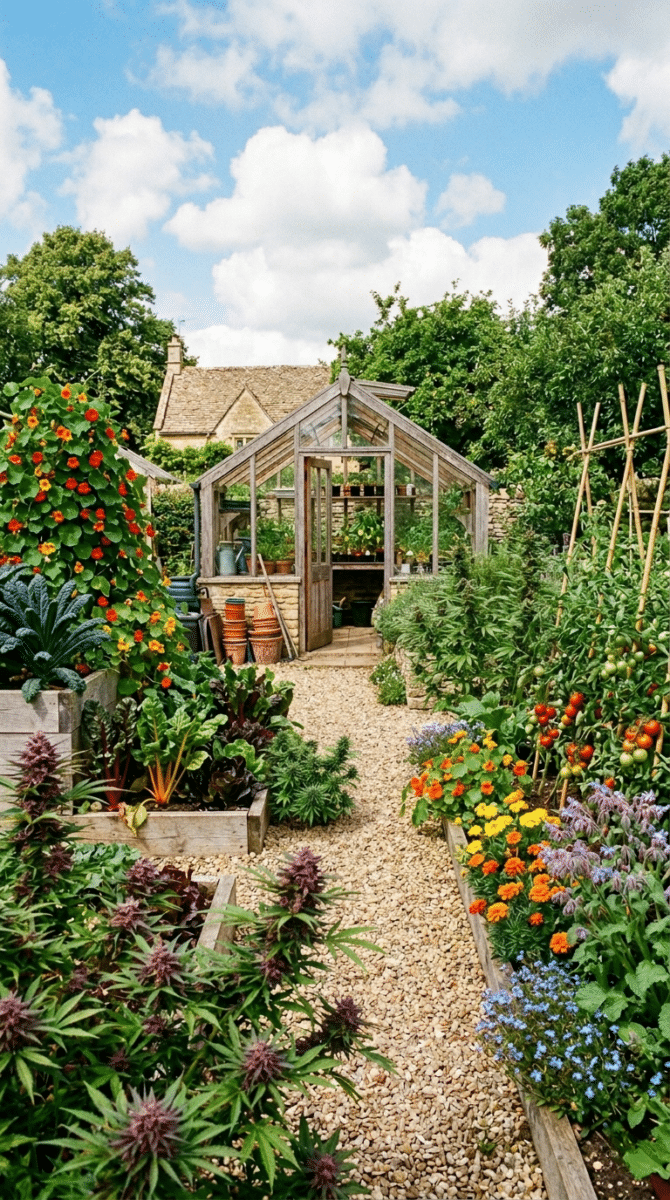
A greenhouse in an enclosed, locked structure is a solid middle ground. It extends the season, provides natural light, and meets the security and visibility requirements if properly built.
Check our USDA Zone Map to find your specific California growing zone and plan your timing accordingly.
Penalties for Going Over the Limit
Anyone who plants, cultivates, harvests, dries or processes more than six living plants shall be punished by imprisonment in a county jail for up to six months, and face a fine of up to $500.
Individuals with prior serious criminal history may face felony charges for exceeding the limit. Growing in violation of local ordinances can also carry separate penalties depending on your jurisdiction.
Ready to Start Growing?
California has one of the best climates in the country for home cannabis cultivation. Now that you know what the law allows, the next step is finding the right genetics for your setup and location. Browse our strain catalog, check the USDA Zone Map for your area, and visit our grow guide when you’re ready to get started.
Browse Our Strain Catalog | How to Grow Guide | USDA Zone Map
Ready to start your grow? Browse our California cannabis seeds to find feminized and autoflower varieties that ship to your door.
Frequently Asked Questions
How many cannabis plants can I grow in California?
Six plants per residence. This is a household limit, not a per-person limit. Multiple adults living together share a single six-plant maximum.
Do I need a permit to grow cannabis at home in California?
At the state level, no permit is required. However, some cities and counties have added local requirements including permits for home cultivation. Check with your local city or county government before you grow.
Can I grow cannabis outdoors in California?
State law allows outdoor growing as long as plants are not visible from any public space and are kept in a secured area. However, many local jurisdictions have banned or restricted outdoor cultivation in their areas. Indoor growing of up to six plants is protected statewide and cannot be banned locally.
Can my city or county restrict my home grow?
Yes, significantly. Local governments in California can require indoor-only growing, impose additional security or permit requirements, and ban outdoor cultivation entirely. They cannot, however, ban indoor cultivation of up to six plants in a private residence or enclosed accessory structure.
Do I need to tag my plants in California?
No. California state law does not require individual plant tags. However, plants must be in a secure, locked space that is not visible from outside the property.
Can my landlord stop me from growing?
Yes. California landlords have the right to prohibit cannabis cultivation on their properties. Check your lease before you plant.
What happens if I grow more than six plants?
Growing more than six plants is a misdemeanor for most adults, punishable by up to six months in county jail and a fine of up to $500. Those with prior serious criminal convictions may face felony charges.
Is cannabis legal to buy in California?
Yes. Unlike some other recently legalized states, California has a fully operational recreational retail market. Adults 21 and older can purchase from licensed dispensaries statewide.
Where can I buy cannabis seeds in California?
Triangle Seeds ships feminized cannabis seeds to California and all 50 states. Check out our California seed catalog. Browse our seed catalog to find the right genetics for your grow.
Sources: