
Last updated: March 2026
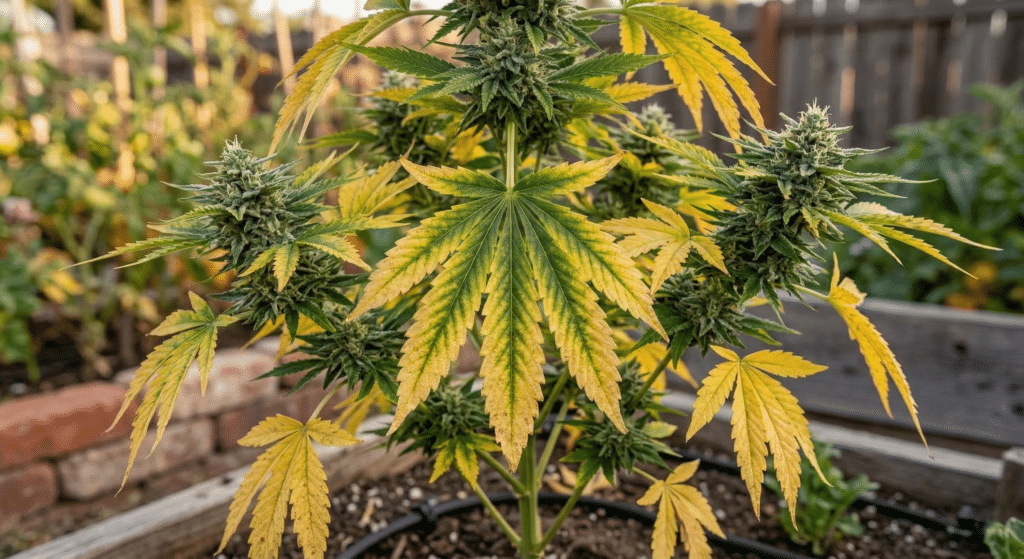
Yellow leaves are one of the most common things new cannabis growers panic about. Sometimes it’s serious. Sometimes it’s completely normal. The key is knowing where on the plant the yellowing is happening, and what else you’re seeing alongside it.
This post starts simple and builds in complexity. If your plant just has a few yellow leaves at the bottom, start at the top and work down only as far as you need to.
First: Is It Actually a Problem?
Before doing anything, answer these two questions:
How many leaves are affected? A few yellowing leaves at the bottom of an otherwise healthy plant is not an emergency. Cannabis sheds older lower leaves throughout its life, especially as the canopy fills in and those leaves stop receiving light. If the rest of the plant is green, growing, and vigorous, a handful of yellow lower leaves is often just the plant doing what plants do.
Where is the yellowing starting? Location is the most useful diagnostic clue you have. A simple rule of thumb: yellowing on older, lower leaves usually points to a macronutrient deficiency (nitrogen, phosphorus, potassium). Yellowing on new growth — the freshest leaves at the top of the plant — usually points to a micronutrient deficiency (iron, manganese, zinc, calcium). This is because macronutrients are mobile inside the plant and get pulled from old leaves first, while micronutrients are immobile and deficiencies show up where the plant is actively trying to build new tissue. The chart below is your starting point.
If you’re seeing any insects, webbing, or unusual markings alongside the yellowing, visit the Triangle Seeds Pest and Disease Identifier to help narrow down what you’re dealing with before moving to the causes below.
Quick Diagnosis Chart
| What you’re seeing | Where | Most likely cause |
|---|---|---|
| Uniform yellow, starting at bottom, moving up | Lower, older leaves | Nitrogen deficiency (macronutrient) |
| Yellow between the veins, veins stay green | Older leaves | Magnesium deficiency (macronutrient) |
| Yellow on newest leaves, old growth looks fine | New growth at top | Micronutrient deficiency (iron, zinc, manganese) |
| Yellow on new growth despite correct feeding | New growth at top | pH lockout blocking micronutrient absorption |
| Droopy, swollen-looking yellow leaves | Any | Overwatering |
| Dry, papery yellow leaves | Any | Underwatering |
| Yellow or bleached at the very top | Leaves closest to light | Light burn (indoor) |
| Pale yellow on a few bottom leaves only | Bottom of plant | Normal aging / light deprivation |
| Patchy yellow, spots, or stippling | Any | Pests |
| Yellow spreading fast despite corrections | Any | Check pH first, then consider leaf tissue test |
Use this chart to narrow down the cause, then read the relevant section below.
Table of Contents
- The Most Common Causes
- If You’ve Checked Everything and Still Can’t Tell
- Should You Remove Yellow Leaves?
- Ready to Start Growing?
- Frequently Asked Questions
The Most Common Causes
Overwatering
This is the single most common reason new growers see yellow leaves, and it’s easy to miss because the instinct when something looks wrong is to water more.
Overwatering doesn’t always mean you’re dumping too much water at once. It usually means you’re watering too frequently, not giving the roots a chance to dry out between waterings. Cannabis roots need oxygen as much as they need water. When the growing medium stays wet constantly, the roots can’t breathe, nutrient uptake breaks down, and the leaves begin to yellow and droop.
What it looks like: Leaves droop and curl slightly downward. They may look swollen or heavy rather than crispy. The soil stays wet for days. Yellowing often mimics a nutrient deficiency because the roots can’t absorb nutrients properly when waterlogged.
What to do: Let the medium dry out more between waterings. Lift the pot when it’s dry and when it’s wet. You’ll learn to feel the difference. Water only when the top inch of soil is dry. Make sure your pot has drainage holes and that water is flowing freely out the bottom when you do water.
Nitrogen Deficiency
Nitrogen is the nutrient cannabis uses most during vegetative growth. It’s essential for chlorophyll production, which is what keeps leaves green. When plants don’t have enough nitrogen, the lower leaves start to pale out and yellow first.
Here’s why it starts at the bottom: nitrogen is a mobile nutrient, meaning the plant can move it from one place to another as needed. When nitrogen runs low, the plant pulls it from its oldest, lowest leaves and sends it up to the new growth at the top. The bottom leaves sacrifice themselves to keep the canopy green.
What it looks like: Uniform pale yellowing starting on the oldest, lowest leaves and gradually moving up the plant. The top of the plant looks relatively normal. Affected leaves may droop and eventually drop on their own.
Important note: Some yellowing of lower leaves during flowering is completely normal. As plants shift energy toward bud production, they naturally draw nitrogen from older fan leaves. If you’re in late flower and seeing some lower leaf yellowing, it’s not necessarily a deficiency. It’s often just the plant doing what it’s supposed to do.
What to do: If you’re in vegetative growth or early flower, increase nitrogen through your nutrient solution or a nitrogen-rich fertilizer. Make sure pH is in range first (see the pH section below). Nitrogen deficiency symptoms can appear even when nitrogen is present if the pH is preventing absorption.
Yellowing on New Growth
If the yellowing is happening on your newest leaves — the freshest growth at the top of the plant — while the older, lower leaves look relatively normal, that’s a different problem from nitrogen deficiency and it requires a different response.
New growth yellowing almost always points to a micronutrient deficiency: iron, manganese, zinc, or calcium are the most common culprits. Unlike macronutrients (nitrogen, phosphorus, potassium), micronutrients are immobile inside the plant. The plant can’t pull them from old tissue and redirect them to new growth. So when there’s a shortage, it shows up first where the plant is actively trying to build something new.
What it looks like: The newest leaves at the tips and top of the plant come in pale, yellow, or with yellowing between the veins (while older leaves stay green). The pattern is the opposite of nitrogen deficiency.
The important nuance: Micronutrient deficiencies in cannabis are rarely caused by an actual shortage of those nutrients in your growing medium. They’re most often caused by pH being out of range, which locks out micronutrients even when they’re present. Check your pH before anything else. Getting pH back into the correct window (6.0 to 7.0 in soil, 5.5 to 6.5 in hydro/coco) often resolves new growth yellowing without any additional supplementation.
What to do: Check pH first. If pH is correct and the problem persists, audit your nutrient program to confirm it’s covering the full range of micro and macronutrients your plant needs at its current growth stage.
For a faster bridge while you sort out the underlying cause, an organic kelp-based foliar spray with fulvic acid can help deliver micronutrients directly through the leaf surface, bypassing whatever is slowing root uptake. It’s not a permanent fix, but it can buy the plant some time while you correct the root zone. One important note: stop all foliar spraying after week three of flowering.
Natural End-of-Life (Lower Leaves)
Not all yellow leaves mean something is wrong.
As cannabis plants grow, the lower leaves gradually get shaded out by the canopy above them. A leaf that isn’t receiving light stops being useful to the plant. The plant stops putting resources into it, it yellows, and it drops. This is normal plant behavior, not a problem.
What it looks like: A few leaves at the very bottom of the plant turn yellow, look tired and limp, and fall off cleanly. The rest of the plant is healthy, green, and growing normally. This often happens to fan leaves that have been buried inside the canopy.
What to do: Nothing, unless the yellowing is spreading quickly or moving up the plant. You can remove fully dead leaves to keep the garden tidy, but there’s no need to intervene when it’s just a few lower leaves on an otherwise healthy plant.
Light Burn
Light burn is an indoor growing problem that can look a lot like other issues. It happens when a grow light is positioned too close to the canopy, exposing the top leaves to more light intensity than they can process.
What it looks like: Yellowing or bleaching at the very top of the plant, on the leaves closest to the light. The rest of the plant looks fine. Affected leaves may feel crispy and are hard to pull off (unlike nitrogen-deficient leaves, which drop easily). The yellowing is concentrated directly beneath the light source.
The key distinguishing feature: nitrogen deficiency starts at the bottom and moves up. Light burn starts at the top and stays there.
What to do: Raise your light. Check the manufacturer’s recommended hanging distance for your specific fixture. If you have a dimmable LED, reduce the intensity. Give the affected leaves time to recover once the light is repositioned. The damaged leaves won’t fully recover, but new growth should come in healthy.
pH Problems
pH is the variable new growers most often overlook, and it causes more confusion than almost anything else in cannabis cultivation. Here’s why: a pH problem looks exactly like a nutrient deficiency, even when your feeding schedule is perfect and your nutrient levels are correct.
Cannabis roots can only absorb nutrients within a specific pH window. In soil, that range is roughly 6.0 to 7.0. In hydroponic or coco setups, it’s tighter: 5.5 to 6.5. When the pH in your growing medium drifts outside that range, the nutrients are physically present but the roots can’t take them in. The plant starves even though it’s being fed. This is called nutrient lockout.
What it looks like: Yellow leaves that don’t respond to added nutrients. You’ve checked your nitrogen, you’ve been feeding consistently, but the yellowing continues or spreads. You might see unusual patterns: yellowing between veins, yellowing on new growth rather than old, or a general pale and sick appearance that doesn’t match any single deficiency cleanly.
What to do: Get a pH meter and test your water and your runoff. Adjust your water to the correct pH range before feeding. If your runoff is significantly off from what you’re putting in, the medium has built up salts or been knocked out of range. Flush with properly pH’d water and resume feeding at a lighter dose.
If you’ve been growing without monitoring pH, this is almost always worth checking before assuming any other diagnosis.
Pests
Certain pests cause yellowing that can be mistaken for nutrient issues, particularly spider mites, russet mites, and thrips, which damage leaf tissue in ways that disrupt chlorophyll and cause pale, yellow, or mottled coloring.
What it looks like: Stippling (tiny dots), streaking, or patchy yellowing that doesn’t match the clean pattern of a nutrient deficiency. You may see fine webbing under leaves (spider mites), or tiny moving dots on the undersides of leaves. Some pests are hard to see without a loupe or jeweler’s scope.
What to do: Check the undersides of leaves carefully with a magnifying tool. Look for movement, webbing, or physical damage. Early intervention is critical. Pests multiply quickly and a small problem becomes a large one within days.
If you’re not sure what you’re dealing with, use the Triangle Seeds Pest and Disease Identifier to help narrow it down before treating.
If You’ve Checked Everything and Still Can’t Tell
Sometimes yellowing is genuinely ambiguous. You’ve checked pH, you’ve corrected your watering schedule, you’ve ruled out light burn, and the plant still looks off.
At that point, if the problem is spreading and affecting yield, a leaf tissue analysis is the most reliable diagnostic tool available. You send a sample of plant tissue to a lab and get a full nutrient profile back, showing exactly what the plant has been absorbing and what’s missing or out of balance. It’s more commonly used by commercial growers, but it’s accessible to home growers too and removes the guesswork entirely.
Search for “plant tissue analysis” or “leaf tissue test” alongside your state to find labs that offer this service. It typically costs $30 to $75 and gives you a precise answer when visual diagnosis isn’t conclusive.
Should You Remove Yellow Leaves?
Generally: leave partially yellow leaves alone, and remove fully dead ones.
A leaf that’s still partly green is still performing some photosynthesis. Removing it prematurely takes away a resource the plant is still using. A leaf that’s fully yellow, dry, and crumbles easily is no longer contributing anything. It’s fine to remove it to keep airflow good and prevent any mold risk in dense canopies.
One exception: if a leaf is showing signs of pest damage or disease, remove it promptly regardless of how yellow it is, to prevent spread.
Ready to Start Growing?
Browse Our Seed Catalog | Read the Germination Guide | Pest and Disease Identifier
Frequently Asked Questions
Why are the bottom leaves on my cannabis plant turning yellow?
The most common causes are nitrogen deficiency, overwatering, or normal leaf aging. Bottom leaves are the first to yellow from nitrogen deficiency because the plant pulls that mobile nutrient upward to newer growth. If the plant is otherwise healthy and it’s just a few bottom leaves, it may simply be natural senescence as older leaves get shaded out.
Why are the top leaves on my cannabis plant turning yellow?
There are two common causes. For indoor growers, yellowing on the leaves closest to your grow light usually indicates light burn — lights positioned too close to the canopy. Move the light further away and check the manufacturer’s recommended distance. The second cause applies to both indoor and outdoor growers: if the newest leaves are coming in pale or yellow while older leaves look fine, that points to a micronutrient deficiency (iron, zinc, or manganese are the most common). Check pH first, as micronutrient lockout from incorrect pH is a more likely culprit than an actual shortage in your growing medium.
Why are my new leaves coming in yellow while the older leaves look fine?
This pattern points to a micronutrient deficiency. Micronutrients like iron, zinc, and manganese are immobile inside the plant, meaning the plant can’t pull them from old tissue to support new growth. When there’s a shortage, new leaves show it first. The most common cause isn’t a missing nutrient — it’s pH being out of range, which prevents the plant from absorbing micronutrients that are already present. Check your pH (6.0 to 7.0 in soil, 5.5 to 6.5 in hydro/coco) before adjusting your nutrient program.
Can overwatering cause yellow leaves?
Yes. Overwatered roots can’t absorb oxygen properly, which disrupts nutrient uptake and causes the same yellowing symptoms as a deficiency. Look for droopy, heavy-looking leaves and soil that stays wet for days as confirmation. Let the medium dry out more between waterings.
What is pH lockout and how does it cause yellowing?
pH lockout happens when the growing medium’s pH falls outside the range where cannabis roots can absorb nutrients (6.0 to 7.0 in soil, 5.5 to 6.5 in hydro/coco). Nutrients are present but physically unavailable to the plant, causing deficiency symptoms including yellowing. Test your water and runoff pH before adding more nutrients.
Is it normal for cannabis leaves to turn yellow during flowering?
Some yellowing of lower fan leaves during mid to late flowering is normal. The plant redirects energy and nutrients toward bud production, drawing from older leaves in the process. If yellowing is limited to lower leaves and buds look healthy, it’s usually not a concern. If it’s spreading rapidly or affecting bud sites, investigate further.
Should I remove yellow leaves from my cannabis plant?
Remove leaves that are fully yellow, dry, and no longer functional. Leave partially yellow leaves alone unless they’re showing signs of disease or pests. Removing still-useful leaves stresses the plant unnecessarily.
What is a leaf tissue analysis?
A leaf tissue analysis is a lab test where you send a plant sample and receive a detailed nutrient profile showing exactly what the plant has been absorbing. It removes the guesswork when visual diagnosis isn’t conclusive. Labs typically charge $30 to $75 per sample. It’s more commonly used by commercial growers but is accessible to anyone and can be worth it when a persistent problem doesn’t respond to standard corrections.
How do I know if yellowing is caused by pests?
Pest-related yellowing often looks mottled, stippled (tiny dots), or streaky rather than uniform. Check the undersides of leaves carefully, using a magnifying loupe if you have one. Look for movement, webbing, or physical damage to the leaf surface. Use the Triangle Seeds Pest and Disease Identifier to help identify what you’re dealing with before treating.
About the Author

Matt, Co-Founder of Triangle Hemp – Matt has been growing plants commercially since 2013, starting with Endless Sun Farms before co-founding Triangle Hemp in 2017 alongside childhood friend Chase. Over more than a decade, Triangle Hemp has produced and sold over a million seeds to home growers, homesteaders, and hemp farmers across the United States. Matt and Chase manage seed selection person
We have a video series with cannabis content creator Catherine Goldberg, aka Senior Savvy Cannabis, where we guide her through her first indoor grow. If you are a new grower, you might find the videos helpful. Watch the grow videos →