
Last updated: March 2026
Timing is the most common reason outdoor cannabis grows underperform. Cannabis seeds should always be germinated indoors or in a protected greenhouse, never directly in the ground, then transitioned outside once conditions are right. Getting that transition timing wrong is where most outdoor grows run into trouble. Start too early and a late frost wipes out seedlings that never had a chance. Start too late and you sacrifice weeks of vegetative growth, which means smaller plants and a lighter harvest. With photoperiod strains, there’s an additional wrinkle: moving plants outside when days are still short can trigger premature flowering before the plant has any size to work with.
Once you know your outdoor window, the rest of the planning falls into place. This guide breaks down when to start cannabis seeds outdoors by region and growing zone, explains the difference between photoperiod and autoflower timing, and walks through how to find your exact planting dates using our USDA Hardiness Zone Map. The cannabis planting calendar below gives you a starting point. The sections that follow give you the context to use it.
Quick Answer
| Region | Start Seeds Indoors | Move Outside | Photoperiod Harvest |
|---|---|---|---|
| Southeast (NC, VA, TN, GA) | Late March – Early April | Late April – Early May | Late Sept – Oct |
| Mid-Atlantic (MD, DE, PA, NJ) | Early–Mid April | Mid–Late May | October |
| Midwest (OH, MI, IL, MO) | Mid April | Late May – Early June | Late Sept – Mid Oct |
| Northeast (NY, MA, VT, ME) | Mid–Late April | Late May – Early June | October (tight in north) |
| Mountain West (CO, MT, ID) | Late April – Early May | Early–Mid June | Late September |
| Pacific Northwest (OR, WA) | Late March – Mid April | Late April – Mid May | October |
| Southwest / California | Late February – March | Late March – April | Oct – Nov |
| South / Gulf Coast (TX, LA, FL) | Late February – March | Late March – Early April | Oct – Nov |
Autoflowers can be started anytime the ground is frost-free and soil temps are above 60°F, as long as they have enough frost-free weeks to finish. Photoperiods need the full window.
Table of Contents
- Photoperiod vs. autoflower: two different timing problems
- Find your exact planting window
- Region-by-region breakdown
- How to start cannabis seeds indoors before moving outside
- Common timing mistakes
- Seeds FAQ
Photoperiod vs. Autoflower: Two Different Timing Problems
The type of seeds you’re growing determines how much timing flexibility you have, and it’s the first thing to sort out before you plan anything else.
Photoperiod seeds flower in response to light. Outdoors, they stay in vegetative growth as long as days are long, then shift to flowering as daylight shortens after the summer solstice. This means:
- They need to go outside early enough to build size during the long vegetative window from May through July.
- If you put them out too early in spring, the short days can trigger flowering. Then, as days lengthen, the plant tries to revert to vegetative growth. That back-and-forth stress stunts the plant and rarely recovers into a useful harvest.
- The safe window is after your last frost date AND after the spring equinox, when days are clearly and consistently getting longer.
Autoflowering seeds flower based on age, not light. They don’t care how many hours of daylight they get. This means:
- You can start them later in the outdoor grow season and still finish before fall.
- No risk of accidental early flowering from short spring days.
- Multiple harvests per season are possible. Start a new batch every 6–8 weeks through summer.
- They’re the better choice for short growing seasons, northern states, high elevation, or any grower who wants more flexibility.
If it’s your first outdoor grow, autoflowers remove a major variable. If you want the largest possible plants and heaviest yields and have the full window to work with, give photoperiods the season.
Find Your Exact Planting Window
The regional table above gives you a starting point, but your actual dates depend on where you live within a region. A grower in Asheville, NC has a meaningfully different outdoor window than someone in Wilmington, NC. Same state, different cannabis growing zone, different timing.
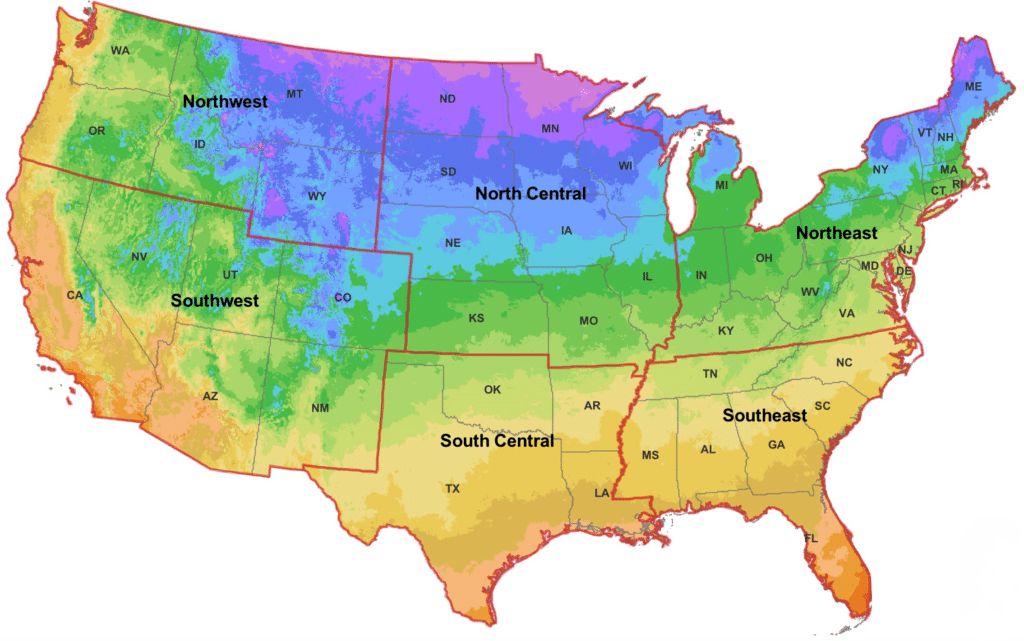
The most useful tool for nailing your window is a hardiness zone lookup. Use our USDA Hardiness Zone Map to find your zone by zip code. Your zone tells you your average minimum temperatures and, from there, your last spring frost and first fall frost dates. Those are the two numbers that define your entire outdoor grow season.
Last spring frost date is the earliest you can safely move seedlings outside. Cannabis seedlings won’t survive a frost. Your exact date depends on your zone, so look it up before you commit to any cannabis planting calendar or schedule.
First fall frost date is when your grow has to be done. Most photoperiod strains need 8–11 weeks of flowering after the light shift in late July/early August, putting harvest in September through October. If your first fall frost arrives early, as it does in mountain zones and northern states, you need fast-finishing genetics or autoflowers that wrap up in August before the cold arrives.
Once you have both dates, the math is simple: that’s your window. Match your seed choice to that window and you’ve solved the hardest part of outdoor planning.
Region-by-Region Breakdown
Southeast (NC, VA, TN, GA, SC, AL, AR, MS)
The Southeast has one of the most forgiving outdoor grow seasons in the country, with last frost dates ranging from late March in the Deep South to early April across the Piedmont and foothills.
- Start seeds indoors: Late March to early April
- Move outside: Late April to early May, once nighttime lows are consistently above 50°F
- Harvest window (photoperiods): Late September through October
- Biggest challenge: Summer humidity. Mold-resistant genetics and good airflow matter more here than in most other regions. Autoflowers started as late as early July will still finish before fall rains arrive, making them a solid option for a second run after an early photoperiod harvest.
Mid-Atlantic (MD, DE, PA, southern NJ)
Frost dates vary significantly here, especially with elevation. Coastal Delaware and eastern Maryland warm weeks earlier than western Pennsylvania.
- Start seeds indoors: Early to mid-April
- Move outside: Mid to late May
- Harvest window (photoperiods): October
- Biggest challenge: Don’t rely on state averages. Growers near the PA Appalachians can see frost well into May. Use the USDA Hardiness Zone Map to confirm your specific zip code before committing to a transplant date.
Midwest (OH, IN, MI, IL, WI, MN, IA, MO)
Wide variation from Missouri in the south, which behaves more like the Mid-Atlantic, to Minnesota in the north where the outdoor grow season is genuinely short.
- Start seeds indoors: Mid-April in the southern Midwest; early May in the northern Midwest and Minnesota
- Move outside: Late May in the south; early June in the north
- Harvest window (photoperiods): Late September to mid-October (tight in the northern half)
- Biggest challenge: In Michigan, Minnesota, Wisconsin, and Iowa, the window between last spring frost and first fall frost is narrow enough that strain selection matters a lot. Fast-finishing photoperiods (8–9 week flower time) and autoflowers are the practical choices. Don’t gamble on a 12-week strain in Zone 4 or 5.
Northeast (NY, MA, CT, RI, VT, NH, ME)
New York has more climate range than most people realize. The Hudson Valley is far more forgiving than the Adirondacks. Maine and Vermont have some of the shortest outdoor windows in the lower 48.
- Start seeds indoors: Mid to late April
- Move outside: Late May in the NYC metro and coastal Connecticut/Rhode Island; early June in northern Vermont and Maine
- Harvest window (photoperiods): October, tight from Zone 5 north
- Biggest challenge: In Vermont and Maine, the window is short enough that a 10+ week flowering photoperiod is a real gamble. Both states have home grow rights. Autoflowers or fast-finishing strains started indoors 6–8 weeks before transplant are the most reliable path to a full harvest.
Mountain West (CO, MT, WY, ID, NM, UT, NV)
Elevation matters more than latitude here. Lower elevation zones like Denver have a last frost in early May, but grow sites at altitude can see frost into June and again in early fall. The window shrinks fast as you go up.
- Start seeds indoors: Late April to early May
- Move outside: Late May at lower elevation; mid-June at altitude
- Harvest window (photoperiods): Late September. Watch the weather closely.
- Biggest challenge: The combination of high UV, short season, and early fall cold is the defining constraint. Colorado has mature home grow laws and a large grower community, but even experienced Colorado growers lean on fast-finishing genetics. New Mexico’s southern zones are considerably more forgiving.
Pacific Northwest (OR, WA)
Western Oregon and Washington are mild and wet in spring. Eastern Oregon and Washington are drier and more continental, with colder winters and hotter summers.
- Start seeds indoors: Late March to mid-April
- Move outside: Late April on the southern Oregon coast; mid-May in western Washington
- Harvest window (photoperiods): October
- Biggest challenge: Late-season humidity and rain in western Oregon and Washington creates serious mold pressure during flower. Mold resistance isn’t a nice-to-have here, it’s a selection criteria. The Willamette Valley and similar inland valleys are the best outdoor zones in the PNW. Oregon and Washington both allow home growing.
Southwest and California
The longest outdoor grow season in the country. Parts of Southern California and the Bay Area can support nearly year-round growing.
- Start seeds indoors: Late February to March
- Move outside: Late March to April across most of California; March in Southern CA and Arizona
- Harvest window (photoperiods): October to November
- Biggest challenge: In the low desert (Phoenix, Las Vegas, inland Southern CA), the July–August heat peak stresses plants hard during late vegetative and early flower stages. Starting early so plants are well-established before peak summer heat, and growing in containers so you can move them to afternoon shade, makes a meaningful difference.
South and Gulf Coast (TX, LA, FL, coastal GA/SC)
Early starts are possible here, but summer heat and humidity replace cold as the main constraint.
- Start seeds indoors: Late February to March
- Move outside: Late March to early April
- Harvest window (photoperiods): October to November (longer in southern Florida)
- Biggest challenge: Heat and humidity together create constant pest and mold pressure from mid-summer through harvest. Genetics that handle humidity well matter. The upside is that multiple autoflower runs per season are realistic. Start in March, harvest in June, run another before fall. Texas has a large home grow movement, though state law hasn’t caught up. Florida has a ballot initiative targeting 2026.
Not sure which region applies to you, or want your exact frost dates? Use our USDA Hardiness Zone Map to look up your zip code.
How to Start Cannabis Seeds Indoors Before Moving Outside
For most of the country, the process is the same regardless of region:
- Germinate indoors 4–6 weeks before your target transplant date. Use our germination guide: a hydrogen peroxide soak followed by the paper towel method for photoperiods, or direct to final pot for autoflowers.
- Keep seedlings under a grow light. Even a basic 100W LED keeps seedlings compact and healthy during low spring light. 18 hours on, 6 hours off works for both types.
- Harden off before transplanting. Don’t move seedlings from indoor conditions straight to full outdoor sun. Spend 5–7 days bringing them outside for a few hours at a time, gradually increasing exposure. Skipping this causes transplant shock and sunburn on young leaves.
- Transplant when nighttime temps are stable above 50°F. Cold nights slow root development and stress young plants. Wait for the weather to actually cooperate, not just for a calendar date.
One hard rule regardless of your climate: do not germinate directly in outdoor soil. Pest pressure, temperature swings, and inconsistent moisture make direct outdoor germination unreliable. Start inside every time.
If you’re in Southern California, South Texas, or South Florida, you have more flexibility on timing than most. Warm soil arrives earlier and the frost risk window is shorter. The process above still applies, just earlier in the calendar.
Common Timing Mistakes
Starting too early and skipping hardening off. Plants moved directly from indoor conditions to full outdoor sun almost always show stress. The transition period is not optional.
Putting photoperiods outside when days are still short. Moving photoperiod plants outside before mid-April in most of the U.S. risks triggering early flowering. A plant that flowers at 12 inches tall because it went out too early won’t recover into a useful harvest.
Treating regional averages as your personal dates. This guide gives you ranges. Your zip code is what actually matters. A late frost can erase a month of work in one night. Check your specific zone at our USDA Hardiness Zone Map before finalizing your schedule.
Choosing genetics that don’t fit your window. A 12-week flowering photoperiod that finishes in November is the wrong seed for Vermont, Minnesota, or Colorado. Check the flowering time for every strain before you buy. We list it for every variety on our shop page.
Starting autoflowers in cold soil. Autoflowers don’t pause and wait the way photoperiods do. They keep the clock running even through poor conditions. A plant that flowers at 6 inches because it went into cold soil too early won’t catch up. Wait for soil temps above 60°F.
If you’re ready to plan your grow and want help matching seeds to your region and window, browse our shop or call or text us at (919) 410-6945. We’ve been growing since 2013 and are happy to point you in the right direction.
Seeds FAQ
Are cannabis seeds legal to buy? Feminized cannabis seeds sold as genetics are legal under the 2018 Farm Bill. Triangle Seeds ships to all states where home growing is legal. Check our state home grow laws series for the rules in your state.
Should I use autoflower or photoperiod seeds for outdoor growing? It depends on your season and your goals. Autoflowers are faster, more forgiving on timing, and ideal for short seasons or multiple runs. Photoperiods grow larger, yield more per plant, and give you more strain variety to work with. If it’s your first outdoor grow, autoflowers reduce the number of things that can go wrong.
Do I need feminized seeds? If you’re growing for flower, you need female plants, and feminized seeds are the most reliable way to guarantee that. A male plant pollinates females, fills them with seeds, and shuts down the flower harvest. With regular seeds, you’d have to identify and pull males early in flower and hope you caught them all in time. Feminized seeds eliminate that step. All Triangle Seeds seeds are feminized.
What’s a good first outdoor strain? For photoperiods, look for a flowering time of 8–9 weeks and mold resistance if you’re in a humid region like the Southeast, Pacific Northwest, or Gulf Coast. For autoflowers, most varieties in our catalog finish in 9–11 weeks from seed. Call or text us at (919) 410-6945 and we’ll match you to the right genetics for your region and setup.
Can I grow seeds I find in purchased flower? Those are usually not feminized and not stabilized genetics. You might get male plants, hermaphrodites, wildly inconsistent phenotypes, or a plant that won’t finish in time for your climate. Starting from quality feminized seeds from a known source removes that uncertainty.
When should I start cannabis seeds outdoors? It depends on where you live. In most of the U.S., the outdoor cannabis planting season runs from late March in the warmest southern states to late May or early June in northern states and high elevation zones. Use your last frost date and first fall frost date to define your window, then work backward to set your indoor start date.
What hardiness zone is best for growing cannabis outdoors? Cannabis grows outdoors across a wide range of zones, from Zone 4 in the northern states to Zone 10 in Southern California and South Florida. The key is matching your seed choice to your zone’s outdoor grow season. Zones 4 and 5 favor autoflowers or fast-finishing photoperiods. Zones 7 and above have enough season for most photoperiod strains to finish comfortably.
About the Author

Matt, Co-Founder, Triangle Hemp Matt has been growing plants commercially since 2013, starting with Endless Sun Farms before co-founding Triangle Hemp in 2017 alongside childhood friend Chase. Over more than a decade, Triangle Hemp has produced and sold over a million seeds to home growers, homesteaders, and hemp farmers across the United States. Matt and Chase manage seed selection personally, only carrying genetics Triangle Hemp has grown and tested. Learn more about Triangle Hemp.
We have a video series with cannabis content creator Catherine Goldberg, aka Senior Savvy Cannabis, where we guide her through her first indoor grow. If you are a new grower, you might find the videos helpful. Watch the grow videos →