
By Matt Spitzer | Last updated: May 2026
Pennsylvania has one of the largest medical cannabis programs in the country — over 439,000 active patient certifications and more than $7.68 billion in cumulative sales through early 2025 — yet recreational cannabis remains illegal and home cultivation is a felony for everyone, including medical patients. Growing even a single cannabis plant without a license carries a prison term of 2.5 to 5 years. Hemp cultivation is legal with a permit from the Pennsylvania Department of Agriculture (PDA), with a $150 application fee and an April 1 deadline for outdoor growers. Five of Pennsylvania’s six neighboring states have legalized adult-use cannabis, and the House of Representatives passed a legalization bill in May 2025 — the first time either chamber had done so — only to see the Senate kill it five days later. What any Pennsylvania resident can do right now is purchase cannabis seeds, including high-THC varieties, for collecting and to be prepared if and when Pennsylvania legalizes home cultivation. Cannabis seeds are legally classified as hemp under the 2018 Farm Bill — the seed itself contains no meaningful THC regardless of what the plant would eventually produce. This post covers Pennsylvania’s hemp permit process, current cannabis law, and the state of legalization efforts.
Disclaimer: Cannabis and hemp laws change. This post reflects our best understanding of Pennsylvania law as of May 2026. Always consult a licensed attorney before making any growing decisions.
Table of Contents
- The Short Version
- Can You Grow Cannabis at Home in Pennsylvania?
- Hemp Is Legal to Grow in Pennsylvania With a Permit
- How to Get a Pennsylvania Hemp Growing Permit
- What the Permit Requires
- Costs to Know Before You Apply
- What Is Changing: Pennsylvania Cannabis Legislation in 2025 and 2026
- Pennsylvania’s Medical Cannabis Program
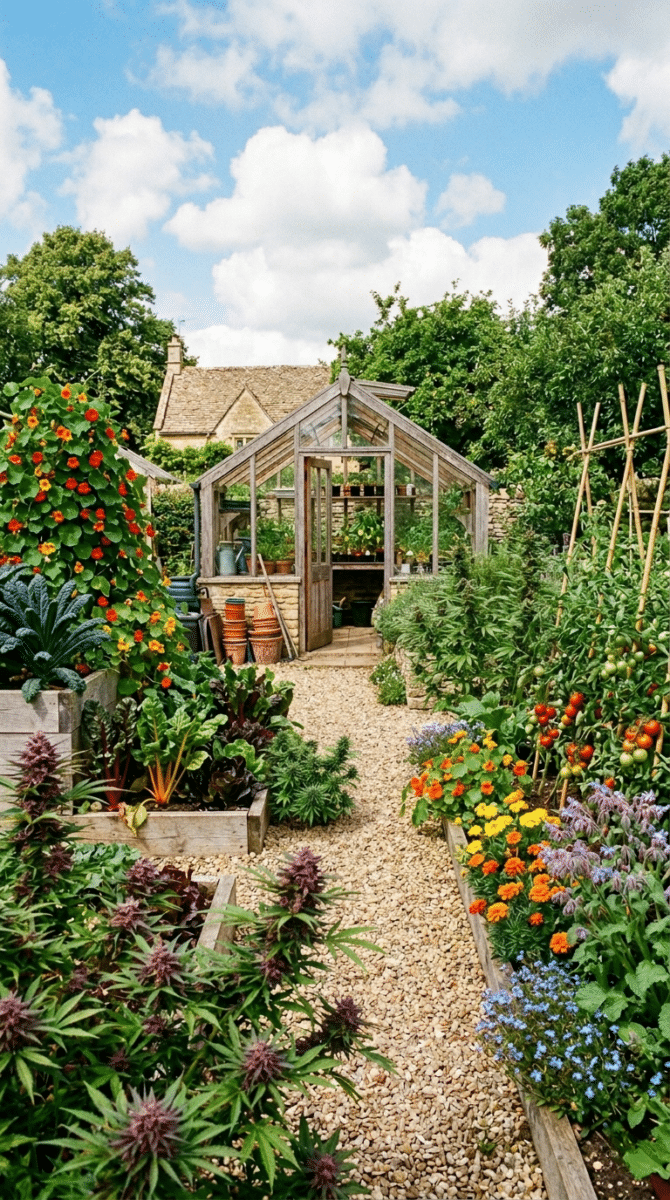
- Outdoor Growing in Pennsylvania
- Penalties for Growing Without a Permit
- Frequently Asked Questions
The Short Version
| Home cannabis cultivation | Illegal — felony for even one plant, including medical patients |
| Medical cannabis program | Yes — active since 2018, 439,000+ active certifications |
| Recreational cannabis | Illegal (HB 1200 passed House 102-101, killed by Senate May 2025) |
| Possession of 30g or less | Misdemeanor — up to 30 days and $500 fine (locally decriminalized in some cities) |
| Hemp cultivation | Legal with a PDA growing permit |
| Outdoor permit application deadline | April 1 each year |
| Processing permit | Accepted year-round |
| Application fee | $150 non-refundable |
| Background check required | Yes (FBI IdentoGO fingerprint) |
| Prior drug felony disqualifier | Yes — within the last 10 years |
| Seeds legal to purchase | Yes — including high-THC varieties |
| Home grow bill pending | SB 76 (medical patients, stuck in Senate committee) |
Can You Grow Cannabis at Home in Pennsylvania?
No — and Pennsylvania is one of the strictest states for home cultivation. Growing cannabis, even a single plant, even for your own personal use, is a felony under Pennsylvania law. There is no exception for medical patients, no exception for small amounts, and no exception for personal use intent.
Possession of 30 grams or less is a misdemeanor carrying up to 30 days in jail and a $500 fine. But cultivation bypasses the misdemeanor tier entirely. Growing any number of plants without a license is a felony under the Pennsylvania Sentencing Guidelines, punishable by 2.5 to 5 years in prison and a $15,000 fine. Growing 10 to 20 plants is treated as possession with intent to deliver, which carries up to one year in prison and a $5,000 fine at the lower end, scaling up from there.
Several Pennsylvania municipalities have reduced penalties for small possession to civil fines. Philadelphia made possession of 30 grams or less a civil violation with a $25 fine in 2014. Pittsburgh, Harrisburg, Erie, and Reading have done the same. But local decriminalization does not change state law — police can still file state misdemeanor charges, and cultivation remains a felony everywhere.
Hemp Is Legal to Grow in Pennsylvania With a Permit
Hemp — cannabis with no more than 0.3% delta-9 THC by dry weight — is legal to cultivate in Pennsylvania under a growing permit issued by the Pennsylvania Department of Agriculture (PDA). Pennsylvania’s Hemp Program operates under the PDA’s USDA-approved state hemp plan and issues both growing permits and processing permits.
A few site restrictions are worth knowing before applying:
Hemp may not be grown within 200 feet of any residential structure without prior written approval from PDA. Hemp may not be grown within 1,000 feet of a pre-kindergarten through 12th grade school property or a public recreational area without prior written approval. Hemp may not be planted within 3 miles of a Department of Health Medical Marijuana Grower-Processor facility.
For outdoor plots, a minimum of 50 plants must be planted during the permit year for the permit to remain valid. Applications for new and renewal permits for the 2027 growing season will be accepted beginning October 1, 2026.

How to Get a Pennsylvania Hemp Growing Permit
Growers can apply online through PDA’s PA Plants portal at paplants.pa.gov, or by completing the Hemp Permit Application and Renewal Form (PDF) and submitting by mail.
Deadline: April 1 each year for outdoor growing permits. Processing permits are accepted throughout the year on a rolling basis.
- Read the PA Hemp General Permit Guidelines thoroughly before applying. PDA requires all applicants to understand and agree to comply with these guidelines before submitting.
- Review the Application Instructions document, also available on the PDA hemp page at pa.gov/agencies/pda/plants-land-water/hemp.
- Obtain an FBI IdentoGO background check. The receipt must be included as an attachment with your application. Background checks are conducted on all applicants and key personnel.
- Prepare a property map for each proposed cultivation site. If you do not own the land, include a signed property lease and a signed PDA access agreement.
- Complete the permit application online through PA Plants or by paper form. Select your intended hemp varieties from PDA’s permitted variety list — consult the Prohibited Varieties and Varieties of Concern list before making selections. Growers can adjust variety selections later on the Hemp Planting Report.
- Submit the application, FBI background check receipt, and all attachments, along with the $150 non-refundable application fee payable to the Commonwealth of PA.
- Once approved, register your grow sites with your local USDA Farm Service Agency (FSA) office for acreage reporting.
Contact the PDA Hemp Program with questions through the PDA website at pa.gov/agencies/pda/plants-land-water/hemp.
What the Permit Requires
Once permitted:
Minimum planting requirement. For outdoor plots, at least 50 plants must be planted during the permit year for the permit to remain active. This is a meaningful threshold for growers considering small personal-scale grows.
Pre-harvest testing. All hemp lots must be tested before harvest to confirm THC compliance. PDA coordinates sampling protocols. Crops testing above 0.3% delta-9 THC must be destroyed.
Site change notification. Any changes to the physical address used for growing or processing require a new application and written approval from PDA before the location is legally permitted. Address changes cannot be made retroactively.
Access agreements. PDA staff, state police, and authorized law enforcement may enter permitted premises to conduct inspections.
Annual renewal. Permits must be renewed annually. Renewal applications for the following year open October 1.
Processing note. If you grow hemp and process it on the same property, and no other hemp is brought onto the property from outside, a separate processing permit is not required. If you bring hemp from another permitted location onto your property for processing, a separate processing permit is required and an additional fee applies.
Costs to Know Before You Apply
Application fee: $150 non-refundable. Paid with the application.
FBI IdentoGO background check: Cost varies depending on the IdentoGO service location and processing option. Typically modest. Required for all applicants and key personnel.
Pre-harvest testing: You pay for sampling and testing directly.
Processing permit (if applicable): Additional fee if you bring hemp from another site for processing.
Pennsylvania’s $150 flat permit fee is straightforward. The 50-plant outdoor minimum and the 200-foot residential setback are the constraints most relevant to small or personal-scale growers considering a backyard hemp operation.
What Is Changing: Pennsylvania Cannabis Legislation in 2025 and 2026
Pennsylvania’s cannabis situation is the most economically charged in this series. With cumulative medical cannabis sales exceeding $7.68 billion, five neighboring states operating adult-use markets, and border-state retailers reporting up to 60% of customers coming from Pennsylvania, the financial pressure on lawmakers is immense.
HB 1200 — State-run stores legalization bill (passed House May 2025, killed by Senate May 2025). On May 7, 2025, the Pennsylvania House of Representatives passed HB 1200 by a vote of 102-101 — a strict party-line vote and the first time either chamber of the Pennsylvania legislature had passed a recreational cannabis bill. The bill would have legalized adult-use cannabis through state-run stores overseen by the Pennsylvania Liquor Control Board, imposed a 12% excise tax plus 6% sales tax, provided for expungement of certain prior convictions, included social equity provisions, and — notably — allowed personal cultivation at home. Five days later, on May 13, 2025, the Senate Law and Justice Committee tabled the bill on a 7-3 vote.
SB 120 and HB 20 — Bipartisan private retail model bills (2025-2026 session). After HB 1200 died, Senate Law and Justice Committee Chairman Dan Laughlin (R) and Sen. Sharif Street (D) introduced SB 120, a bipartisan legalization bill using a private retail model rather than state-run stores. Rep. Emily Kinkead (D) and Rep. Abby Major (R) introduced a companion bill, HB 20 (the Keystone Cannabis Act), with a 13% tax rate, a 2.5-ounce possession limit, and 60 permits reserved for social equity applicants. As of May 2026, neither SB 120 nor HB 20 has been scheduled for a committee hearing.
Governor Shapiro’s three consecutive legalization proposals. In his budget addresses for fiscal years 2024-2025, 2025-2026, and 2026-2027, Governor Josh Shapiro has proposed legalizing adult-use cannabis and projected $250 million in annual revenue. His February 2026 budget address again called on lawmakers to act, citing the competitive disadvantage of being the last major state in the Northeast without legal adult-use sales.
SB 76 — Medical patient home grow bill (stuck in committee, 2025). Introduced January 22, 2025, SB 76 would allow registered medical cannabis patients aged 21 and older to cultivate cannabis at home for personal use. The bill is stuck in a Senate committee and has not advanced.
Pennsylvania’s $7.68 billion medical market as political context. Pennsylvania’s medical program generated this revenue while surrounding states pulled billions more in cross-border adult-use sales. Independent Fiscal Office projections show the state’s structural budget deficit growing, with the Rainy Day Fund projected to decline — which makes cannabis tax revenue an increasingly compelling political argument for the next legalization attempt.
Pennsylvania’s Medical Cannabis Program
Pennsylvania’s Medical Marijuana Act (Act 16 of 2016) was signed by Governor Tom Wolf on April 17, 2016. First dispensary sales began on February 15, 2018. As of November 2025, the program has 439,381 active patient certifications, making it one of the largest medical-only programs in the country.
Qualifying patients with serious medical conditions — including cancer, PTSD, epilepsy, chronic pain, multiple sclerosis, and many others — can register online with the Pennsylvania Medical Marijuana Program, obtain a certification from an approved physician, pay the $50 card fee, and purchase from over 170 licensed dispensaries statewide.
Patients can possess up to a 90-day supply as recommended by their physician. Products include flower for vaporization, oils, tinctures, topicals, pills, and edibles. Home cultivation is not permitted — all medical cannabis must be purchased from a licensed dispensary.
Out-of-state medical cannabis cards are not recognized in Pennsylvania. If you have a card from another state, you cannot purchase from a Pennsylvania dispensary.
Outdoor Growing in Pennsylvania
Pennsylvania spans USDA hardiness zones 5a through 7a, with the Allegheny Mountains in the north-central part of the state in zones 5a and 5b, the central agricultural region reaching zones 6a and 6b, and the southeastern corner including Philadelphia approaching zone 7a. The outdoor growing season runs from mid-May through October in most of the state, with a shorter frost-free window in the north-central mountain counties.
Pennsylvania’s fertile agricultural land in the Lancaster County region and across the central and southeast is well-suited to outdoor hemp production. The state issued 165 hemp growing permits in 2025, and the program has grown steadily since its launch.
Photoperiod hemp strains, which flower as day length shortens in late summer, typically reach maturity in late September through mid-October across most of Pennsylvania. Autoflowering hemp strains — finishing in 70 to 90 days regardless of light cycle — are well-suited to growers in the mountain counties who want to stay clear of early fall frost risk, or to any licensed grower who wants more precision over their harvest timing.
If you are a licensed hemp grower looking for genetics suited to Pennsylvania’s climate, our USDA zone map tool can help you identify your zone and planting window. We carry CBD seeds for outdoor production, and if you want to be ready for when Pennsylvania legalizes home cultivation, you can browse our full seed catalog — including high-THC feminized varieties. The seeds themselves are legally classified as hemp and are legal to purchase and ship to Pennsylvania today.
Penalties for Growing Without a Permit
Cultivation of cannabis without a license is a felony in Pennsylvania regardless of the amount or purpose:
Growing any number of plants is a felony carrying 2.5 to 5 years in prison and a $15,000 fine on a first offense. Growing 10 to 20 plants is treated as possession with intent to deliver. Repeat offenders face doubled penalties. Driver’s license suspension applies to cultivation convictions.
Possession of drug paraphernalia used for cultivation is a misdemeanor carrying up to one year in jail and a $2,500 fine.
Growing hemp without a PDA permit is also illegal under Pennsylvania state law. Any physical address change to a cultivation or processing location requires new written approval from PDA before growing can begin at that location.
Ready to start your grow? Browse our Pennsylvania cannabis seeds to find feminized and autoflower varieties that ship to your door.
Frequently Asked Questions
Is it legal to grow cannabis at home in Pennsylvania?
No. Growing even a single cannabis plant for personal use is a felony in Pennsylvania, carrying 2.5 to 5 years in prison and a $15,000 fine. This applies to everyone, including registered medical patients. Pennsylvania has some of the strictest cultivation penalties in the Northeast.
Can I grow hemp at home in Pennsylvania?
You can grow hemp on your property with a valid PDA growing permit. The application fee is $150 and the deadline for outdoor permits is April 1 each year. Note that outdoor permits require a minimum of 50 plants and hemp cannot be grown within 200 feet of a residential structure without prior PDA approval.
Did Pennsylvania come close to legalizing recreational cannabis?
Yes. HB 1200 passed the Pennsylvania House on May 7, 2025 by a 102-101 vote — the first time either chamber had passed a recreational cannabis bill. The Senate Law and Justice Committee killed it five days later on a 7-3 vote. Bipartisan bills using a private retail model (SB 120 and HB 20) are pending but have not been scheduled for hearings.
Does Pennsylvania have a medical cannabis program?
Yes. Pennsylvania’s medical cannabis program has been active since February 2018 and has over 439,000 active patient certifications. Qualifying patients can purchase from over 170 dispensaries statewide. Home cultivation is not permitted, and out-of-state medical cards are not recognized.
Are there cities in Pennsylvania where marijuana is decriminalized?
Yes. Philadelphia, Pittsburgh, Harrisburg, Erie, Reading, and several other municipalities have reduced possession of 30 grams or less to a civil fine of $25 to $100. But local decriminalization does not override state law — police can still file state misdemeanor charges, and cultivation remains a felony statewide regardless of local ordinances.
Can I buy cannabis seeds in Pennsylvania?
Yes. Cannabis seeds — including high-THC feminized varieties — are legal to purchase in Pennsylvania. Cannabis seeds are legally classified as hemp under the 2018 Farm Bill — the seed itself contains no meaningful THC regardless of what the plant would eventually produce. Many Pennsylvania residents purchase seeds now for collecting and to be ready if and when the state legalizes home cultivation. Triangle Seeds ships feminized cannabis seeds, THC seeds, and CBD seeds to Pennsylvania. Check out our Pennsylvania seed catalog. Browse our full catalog.
About the Author

I’m Matt, co-founder of Triangle Seeds. I’ve been growing commercially since 2013 and started Triangle Seeds in 2017 with my business partner Chase. We ship seeds nationwide. Call or text me at (919) 410-6945. Learn more about Triangle Seeds.