

The Science Behind Your Endocannabinoid System
Last updated: February 2026
Summary: Your body has a built-in system that interacts directly with cannabis. How that system is wired, how sensitive it is, and what kind of shape it’s in on any given day shapes your experience far more than the strain itself. Here’s what’s actually going on.
Table of Contents
- The Same Strain, Two Different Experiences
- What the Endocannabinoid System Is
- CB1 and CB2 Receptors: Two Very Different Jobs
- Your Body Makes Its Own Cannabinoids
- Why Everyone’s ECS Is Wired Differently
- Terpenes and Why They Change the Experience
- Why the Same Strain Hits You Differently on Different Days
- How Tolerance Works
- Why Set and Setting Still Matter
- What This Means for Finding Your Strain
- Frequently Asked Questions
The Same Strain, Two Different Experiences
Picture this. Two people consume the same strain, same batch, roughly the same amount. One feels relaxed and talkative. The other feels anxious and wants to go lie down in a dark room. A third person barely notices anything at all.
This happens all the time. And it makes sense once you understand that the experience isn’t just about what’s in the plant. It’s about what happens when those plant compounds meet your biology, which is completely unique to you.
The system responsible for that interaction is called the endocannabinoid system. Once you understand what it does, strain selection starts to make a lot more sense.
(Related: Why THC% Doesn’t Really Matter)
What the Endocannabinoid System Is
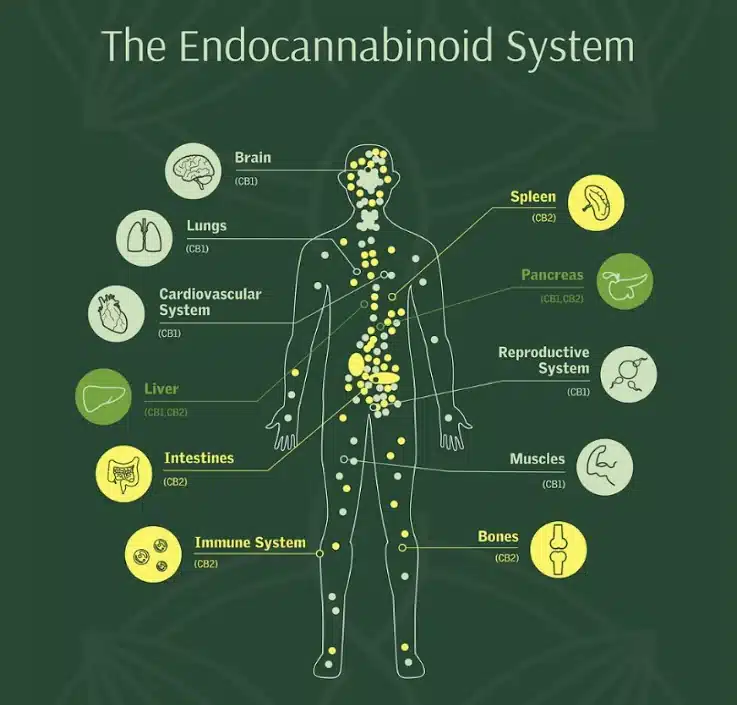
Your body has a network of receptors running through your brain, nervous system, and immune system whose job is to help regulate mood, memory, sleep, pain, appetite, and immune response, among other things. This network is called the endocannabinoid system, or ECS.
It was only formally discovered in the early 1990s, which explains why it took scientists so long to understand why cannabis does what it does.
The ECS has three basic parts: receptors that receive signals, natural compounds your body produces to send those signals, and enzymes that clean things up when the job is done. Cannabis works by interacting with this system directly, which is why it affects so many different things at once. Your body already has the hardware. Cannabis just knows how to use it.
CB1 and CB2 Receptors: Two Very Different Jobs
Think of receptors as locks and cannabinoids as keys. Your endocannabinoid system has two primary lock types: CB1 and CB2. THC and CBD fit these locks differently, which is a big part of why they produce such different experiences.
CB1 receptors are found mostly in the brain and central nervous system, concentrated in areas that handle memory, emotion, coordination, sensory processing, and time perception. When THC binds to CB1 receptors, it’s essentially unlocking those areas and altering how they communicate. That’s where the perceptual shift comes from: the way music sounds different, time moves differently, and thoughts take unexpected turns. The more CB1 receptors you have in a given brain region, and the more sensitive they are, the more pronounced the effect in that area tends to be.
CB2 receptors live mostly in the immune system and body tissues rather than the brain. They’re less involved with perception and more involved with inflammation, pain response, and immune function. CBD connects more strongly with CB2 receptors than THC does, which is why CBD-dominant strains tend to produce physical relief and calm without the perceptual effects that THC creates.
Here’s where individual biology enters the picture. The number of CB1 receptors you have, where they’re concentrated in your brain, and how tightly they bind to THC are all determined largely by genetics. Two people consuming the same strain are essentially inserting the same key into different locks. The key is identical. The locks are not.
Your Body Makes Its Own Cannabinoids
Cannabis works the way it does partly because your body already produces its own cannabinoid-like molecules. You’re not introducing something entirely foreign when you consume cannabis. You’re interacting with a system your body already uses to regulate itself.
The two most studied of these natural compounds are anandamide and 2-AG.
Anandamide is sometimes called the “bliss molecule,” and the name gives you a reasonable sense of what it does. It binds to the same CB1 receptors that THC binds to and plays a role in mood, memory, and how your brain processes reward. People who naturally maintain higher anandamide levels tend to experience less baseline anxiety and a more stable sense of wellbeing. Some people carry a genetic variant that slows down the enzyme responsible for breaking anandamide down, meaning it stays in their system longer. Research suggests these individuals tend toward lower anxiety overall and may feel less of the anxious edge that THC can sometimes produce in others.
2-AG is less talked about but actually more abundant in the body. It plays a broader role in pain regulation, immune function, and protecting the nervous system.
When THC enters the picture, it mimics anandamide by binding to those same CB1 receptors. The difference is that THC binds more strongly and sticks around longer than anandamide does naturally, which is why the effects are more pronounced. How much anandamide your body is already producing when you consume cannabis affects how that THC lands. Someone with a well-functioning, balanced endocannabinoid system going into the experience will respond differently than someone whose system is depleted from stress or poor sleep.
Why Everyone’s ECS Is Wired Differently
Receptor density is one variable. But there are others worth knowing about.
Your metabolism affects how quickly your body processes THC. Some people break it down fast, effects come on quickly and fade within an hour or two. Others metabolize THC more slowly and find that effects build gradually and linger much longer than expected. This is largely genetic and explains why two people consuming the same amount can have wildly different experiences with how long things last.
Body composition plays a role too. THC is fat-soluble, meaning it gets stored in fatty tissue and slowly releases back into the bloodstream over time. This is one reason why effects from edibles or heavy sessions can feel like they carry over into the next day.
Hormones matter as well. Estrogen appears to increase CB1 receptor sensitivity, which is one reason some research suggests women may respond more strongly to THC than men, and why the same strain can feel noticeably different at different points in a hormonal cycle.
None of this means cannabis is unpredictable. It means the variables are personal, and paying attention to your own patterns over time is more useful than any general rule.
Terpenes and Why They Change the Experience
THC gets most of the attention, but it doesn’t work in isolation. The terpenes in cannabis, those aromatic compounds that give each strain its distinct smell, interact with your nervous system and ECS in ways that meaningfully shape the experience.
A few worth knowing:
Myrcene is one of the most common cannabis terpenes and is associated with a sweet, fruity, or musky aroma. It’s thought to help THC cross into the brain more readily and tends to produce a heavier, more sedating body effect.
Limonene brings a bright citrus quality and is associated with mood elevation and reduced anxiety. Strains with a lot of limonene often feel lighter and more manageable even at the same THC level as something more myrcene-forward.
Linalool is the terpene shared with lavender. It has calming, anti-anxiety properties and softens the edge that some strains can produce.
Beta-caryophyllene is unique because it’s the only terpene known to interact directly with CB2 receptors. It contributes to anti-inflammatory effects and a mild calming quality, and it’s common in peppery, spicy-smelling strains.
What this means practically is that the smell of a strain is genuinely useful information. Your nose is picking up on the terpene profile, and that profile tells you something real about how the strain is likely to behave.
Why the Same Strain Hits You Differently on Different Days
This one surprises a lot of people. You’ve found a strain that works well for you, used it a dozen times, and then one day it just feels different. More anxious, less effective, or oddly flat.
Your ECS is not static. It responds to your current state, and your current state changes constantly.
Poor sleep reduces CB1 receptor sensitivity, meaning the same dose lands differently when you’re tired. Chronic stress depletes your natural endocannabinoid levels, changing the baseline your body starts from. What you’ve eaten, how hydrated you are, where you are in a hormonal cycle, all of it influences the experience.
Food timing matters more than most people realize. Consuming cannabis on an empty stomach produces a faster, more intense effect than consuming it after a meal. With edibles especially, a fatty meal before consumption can significantly increase absorption and intensity.
This variability is not a flaw. It’s your body being responsive. But it does mean that building a reliable relationship with any strain takes some time and attention.
How Tolerance Works
If you consume cannabis regularly, you’ve probably noticed that it takes more over time to feel the same effect. There’s a straightforward biological reason for this.
When CB1 receptors are repeatedly activated by THC, the brain responds by pulling some of those receptors back or making them less responsive. It’s a protective adaptation. Less receptor availability means the same amount of THC produces a weaker effect.
What’s interesting is that tolerance doesn’t develop evenly across all effects. The perceptual and sedative effects tend to fade faster with regular use than the physical relief effects do. This is why longtime consumers often feel like cannabis no longer affects them the way it once did, while still finding it genuinely useful for pain or sleep.
The good news is that tolerance reverses. A few weeks away from cannabis is usually enough for receptor sensitivity to recover meaningfully. After a break, the same strain that had stopped working will often feel effective again.
Why Set and Setting Still Matter
There’s a concept borrowed from psychedelic research called “set and setting.” Set is your mindset going in, your mood, stress level, and expectations. Setting is your environment, where you are, who you’re with, whether you feel comfortable and safe.
These aren’t just psychological factors. They’re physiological ones.
If you’re stressed or anxious before you consume, your body is already running elevated stress hormones. Introducing THC into that state can amplify the anxiety rather than calm it. The same strain in a relaxed environment with people you trust can feel completely different than it does on a hard day alone.
Experienced consumers tend to pay as much attention to their state going in as they do to the strain itself. If the day has been rough, it may not be the right time for a strain that already leans toward introspection or intensity.
What This Means for Finding Your Strain
All of this might sound like it makes finding the right strain more complicated. It doesn’t have to.
What it means is that the process is personal, and the only way to learn what works for you is to try different things and pay attention. Not just to how intense the effect is, but to the character of it. Does a strain feel physically relaxing or mentally engaging? Does it make you want to be social or be quiet? Does it help with sleep or make your mind more active?
Keep loose notes if that helps. Pay attention to how you felt going in, whether you’d eaten, what time of day it was. Patterns emerge over time, and those patterns are far more useful than any number or name on a label.
Your ECS is uniquely yours. Getting to know how it responds to different genetics, terpene profiles, and conditions takes time, but it’s genuinely worth the effort.
Frequently Asked Questions
What is the endocannabinoid system?
It’s a network of receptors found throughout your brain and body that helps regulate mood, sleep, pain, memory, appetite, and immune function. Your body produces its own natural compounds to activate this system, and cannabis compounds interact with it in a similar way. It was formally identified in the early 1990s, which is part of why the science around cannabis took so long to develop.
Why does cannabis affect some people more than others?
Mainly because of differences in the endocannabinoid system itself. The number and sensitivity of your receptors, how quickly your body metabolizes THC, your natural endocannabinoid levels, your hormonal status, and your body composition all play a role. No two people have the same ECS, which is why identical strains can produce completely different experiences in different people.
What is the difference between CB1 and CB2 receptors?
CB1 receptors are concentrated in the brain and are responsible for most of the perceptual effects of THC. CB2 receptors are found mainly in the immune system and body tissues and are more involved with pain and inflammation. CBD interacts more with CB2 receptors, which is why it can provide physical relief without producing the perceptual shift that THC creates.
Can your endocannabinoid system become depleted?
Yes. Chronic stress, poor sleep, poor nutrition, and lack of exercise can all reduce your body’s ability to produce and maintain its own natural endocannabinoids. When this happens, mood and pain sensitivity are affected, and your response to cannabis changes as well. Some researchers refer to this as clinical endocannabinoid deficiency.
Why does the same strain feel different on different days?
Because your ECS responds to your current physiological state, which changes constantly. Sleep, stress, food intake, hydration, and hormonal fluctuations all affect how cannabis lands on any given day. A strain that feels right when you’re well-rested and relaxed may feel very different when you’re tired or stressed.
What are terpenes and why do they matter?
Terpenes are the aromatic compounds that give each strain its distinctive smell. They also interact with your nervous system and endocannabinoid system in ways that shape the overall experience. The terpene profile of a strain is often a better predictor of how it will affect you than the THC percentage. The smell you notice when you open a package is real, useful information.
How does tolerance work and can it be reversed?
Regular THC use causes CB1 receptors to become less sensitive over time, which is the biological basis of tolerance. The same dose produces a weaker effect as this happens. The good news is that it reverses within a few weeks of taking a break, after which receptor sensitivity recovers and effects return closer to where they started.
About the Author

Matt, Co-Founder of Triangle Hemp – Matt has been growing plants commercially since 2013, starting with Endless Sun Farms before co-founding Triangle Hemp in 2017 alongside childhood friend Chase. Over more than a decade, Triangle Hemp has produced and sold over a million seeds to home growers, homesteaders, and hemp farmers across the United States. Matt and Chase manage seed selection person
We have a video series with cannabis content creator Catherine Goldberg, aka Senior Savvy Cannabis, where we guide her through her first indoor grow. If you are a new grower, you might find the videos helpful. Watch the grow videos →