
Author: Matt Spitzer | Updated July 2026
Knowing when to harvest is one of the biggest calls you’ll make all season, and it’s rarely as simple as waiting for the “right” trichome color. If you’re timing your harvest with our how to grow guide in hand, this post covers the piece that guide only touches on: what to do when trichome color, weather, and disease pressure don’t agree with each other.
Quick Answers
- Trichomes tell you when the plant is ready. Cloudy trichomes signal peak potency approaching. A mix of mostly cloudy with some amber is when most growers harvest.
- Weather can override trichome color. A big storm or a stretch of rain heading your way, combined with buds that are close to mature, is often a good reason to harvest early.
- Bud rot (botrytis) starts inside the bud, not on the surface, so it can be well established before you see it.
- Light frost alone typically does not damage buds. A hard freeze is a different story.
- If you find bud rot on some buds, harvesting early can save the rest of the crop, even without bad weather in the forecast.
Table of Contents
- Start With Trichome Color
- When Weather Should Override Trichome Color
- What About Frost
- Why Bud Rot Is Hard to Catch Early
- If You Already See Bud Rot
- Putting It All Together
- FAQ
Start With Trichome Color
Trichome color is the standard starting point for harvest timing, and for good reason. It’s the most direct read you can get on where the plant actually is in its maturation, rather than relying on calendar dates or the packaging’s estimated flowering time.
Use a jeweler’s loupe or a cheap USB microscope and look at the trichomes on the buds themselves, not just the sugar leaves. This is the handheld microscope we use.
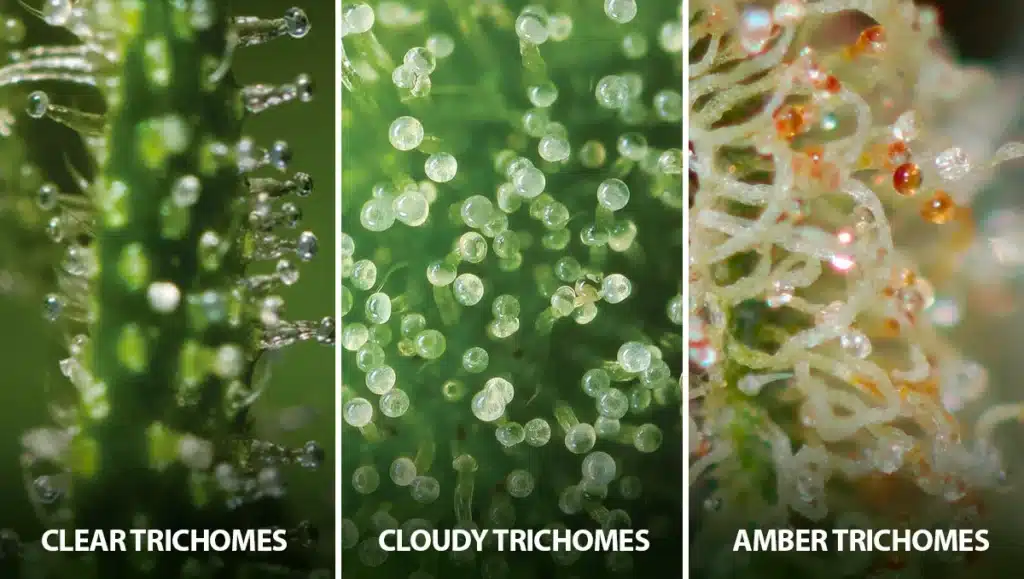
- Clear trichomes mean the plant needs more time.
- Cloudy trichomes mean cannabinoid production is at or near its peak.
- Amber trichomes mean the trichomes are starting to degrade.
Most growers aim to harvest somewhere in the mostly cloudy, some amber range, adjusting slightly based on whether they want a more energetic or more relaxed result. But trichome color assumes everything else is going your way. Weather and disease pressure are the two factors that can force your hand before the trichomes say you’re ready.
When Weather Should Override Trichome Color
If a big storm or a week-long stretch of rain is in the forecast and your buds are close to mature, it’s often smarter to harvest early rather than hold out for perfect trichome color.
Here’s why. Dense, mature buds are the most vulnerable to bud rot, and rain combined with the humidity that follows it creates ideal conditions for the fungus to take hold. A few days of lost ripening is a much smaller loss than watching a chunk of your harvest turn into gray mush.
This is a judgment call, not a hard rule. The closer your trichomes already are to your target range, the easier the decision. If you’re still mostly clear trichomes and a storm is coming, you may just need to accept some risk, since harvesting too early sacrifices potency and yield in a different way. But if you’re already in the cloudy-to-amber window and rain is on the way, there’s rarely a good reason to wait.
What About Frost
Frost worries a lot of growers late in the season, but it’s worth separating light frost from a hard freeze.
Light frost on its own does not appear to damage buds. If your trichomes are close to where you want them and only a light frost is expected, it’s usually fine to let the plant finish out rather than rushing the harvest. This is different from a hard freeze, which can damage plant tissue and is a much bigger risk to the flower itself. Keep an eye on how hard the frost in your forecast actually is, not just whether frost is mentioned at all.
Why Bud Rot Is Hard to Catch Early
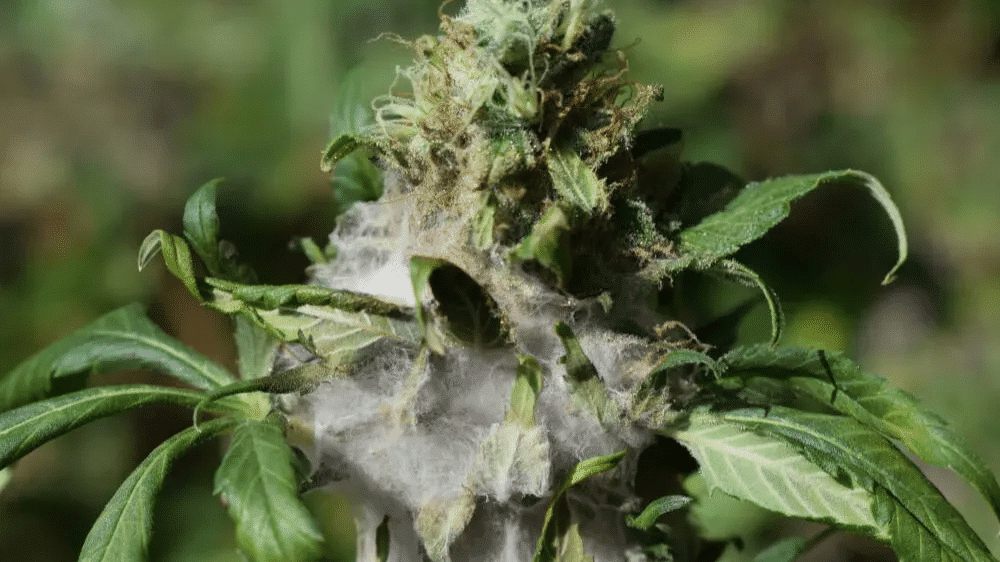
Bud rot, caused by the fungus botrytis, forms from the inside of the bud outward. That means it can already be established before there’s anything visible on the surface, which is what makes it so much more dangerous than problems you can spot early, like powdery mildew.
Check your densest buds regularly during the last few weeks of flowering:
- Gently squeeze buds and feel for any softness or mushiness compared to their neighbors.
- Look for discoloration, especially grayish or brownish patches.
- Smell for anything musty or off.
Catching it a day or two earlier can be the difference between losing one bud and losing a branch.
If You Already See Bud Rot
If you find bud rot on a bud, the only real remedy is to cut it out. Move carefully. Botrytis spreads through spores, and touching an infected bud and then a healthy one, or working through your plant without cleaning your hands or tools in between, can spread it to buds that were otherwise fine.
Even if bad weather isn’t in the forecast, finding bud rot on some of your buds can be reason enough to harvest early. Bud rot spreads fast, and pulling the plant sooner rather than later can save the majority of your flower instead of losing more of it while you wait for ideal trichome color.
Putting It All Together
Trichome color tells you when the plant is ready under ideal conditions. Weather and bud rot tell you when you might not have the luxury of waiting for ideal. When they’re in conflict, weather and disease pressure should usually win out over a few extra days of trichome development.
FAQ
Can I harvest before my trichomes are fully cloudy? Yes. If a major storm is coming or you’re seeing bud rot spread, harvesting slightly early is usually better than risking the crop, especially once you’re already close to your target trichome color.
Does light frost ruin cannabis buds? No, light frost on its own typically does not damage buds. A hard freeze is more of a concern and worth watching for separately.
How do I know if it’s bud rot and not just a wet bud? Bud rot usually comes with softness or mushiness that doesn’t match the surrounding buds, along with gray or brown discoloration and a musty smell. A bud that’s simply wet from rain or dew will dry out and firm back up.
Can I save a plant that has bud rot? Often yes, if you catch it early. Cut out the affected bud completely, being careful not to spread spores to nearby buds as you work.
Ready to start your next grow with genetics bred for real outdoor conditions? Browse our full seed catalog.

Matt, Co-Founder of Triangle Seeds — Matt has been growing commercially since 2013 alongside co-founder Chase. Over a decade, Triangle Seeds has sold over a million seeds to home growers and hemp farmers across the US. We ship nationwide. Call/text (919) 410-6945. Learn more
As an Amazon Associate, Triangle Seeds earns from qualifying purchases.
We have a video series with cannabis content creator Catherine Goldberg, aka Senior Savvy Cannabis, where we guide her through her first indoor grow. If you are a new grower, you might find the videos helpful. Watch the grow videos →