

Author: Matt Spitzer | Updated July 2026
If you are here because something is already wrong with your plants, start with the section that matches your problem and get it under control first. Then come back for the prevention piece, because the real goal is not just fixing this outbreak, it is making sure the next one never starts. This guide covers how professional growers treat cannabis pests and disease organically outdoors, whether you are in a backyard, a raised bed, or a full outdoor plot. If you are still setting up, our how to grow guide covers the basics.
Quick Answers
- Identify first, then treat. Match the symptom to the pest or disease, then use the right organic tool rather than spraying blindly.
- Attract native beneficial insects, don’t release them. Outdoors, companion planting to draw in native predators works far better than buying and releasing beneficials, with active spider mite infestations the main exception.
- Organic does not mean unrestricted. Some OMRI-listed sprays, including pyrethrins and spinosad, carry real residue risk on cannabis flower and require careful timing, and outdoors you also have to account for drift and rain wash-off.
- Healthy soil and a diverse garden are what keep problems from coming back once you have treated them.
- Catching it early changes everything. A problem caught on day one instead of day ten is the difference between losing a few buds and losing a plant.
Table of Contents
- Identify Your Problem
- How to Treat Common Pests and Disease
- Beneficial Insects
- Organic Sprays and What to Watch For
- Scouting: Catching Problems Early
- Preventing the Next Outbreak: Soil and Site
- Building a Resilient Garden Ecosystem
- The Bigger Picture: IPM
- FAQ
Identify Your Problem
Treatment starts with correct identification, since the wrong treatment wastes time you may not have. Here are the most common pests and diseases outdoors, and what they look like.
- Spider mites: tiny specks on the tops of leaves, fine webbing in bad infestations. Thrive in hot, dry conditions and on stressed plants.
- Caterpillars and budworms: chew holes in leaves and bore into buds, where their damage also invites bud rot.
- Aphids: soft-bodied insects clustered on new growth, leave sticky honeydew behind.
- Powdery mildew: white powdery spots on leaves, spreads fast in humid conditions with poor airflow.
- Bud rot (botrytis): forms inside dense buds and works outward, so it is hard to catch early. Rises fast after rain and in humid weather.
How to Treat Common Pests and Disease
Here is the organic treatment path for each, using tools covered in more detail further down.
- Spider mites: spray insecticidal soap on the undersides of leaves, repeating on a several-day cycle to catch newly hatched mites. Keep plants healthy and unstressed, since mites target stressed plants. Outdoors, a healthy garden usually hosts native mite predators already, but spider mites are the one case where releasing predatory mites (Phytoseiulus persimilis) can be worth it for an active infestation. For the most effective treatment, plan on three releases spaced 5 days apart.
- Caterpillars and budworms: treat with Btk, which targets caterpillars specifically and is safe around beneficial insects, and scout buds regularly for chew holes and frass so you catch them before they bore in. Native and companion-plant-supported parasitic wasps help keep numbers down over the season.
- Aphids: outdoors, native predators like ladybugs, lacewings, and parasitic wasps do most of the work, so support them through companion planting rather than reaching for a spray at the first sign. If aphids start getting out of hand, reduce the population by removing the worst-affected leaves, do an insecticidal soap knock-down, then follow with Athena’s IPM spray.
- Powdery mildew: remove the worst-affected leaves, treat remaining growth with potassium bicarbonate or something like Athena’s IPM spray on contact, and improve spacing and airflow. Act on the first spot rather than waiting. If your flowers have not started forming yet, a micronized sulfur spray gives the plants a quick hit of sulfur that helps them defend against PM and is very effective at preventing future infestations.
- Bud rot (botrytis): there is no good spray fix once it is inside the bud. Cut out affected buds carefully without spreading spores. If a stretch of rain is coming and buds are close to mature, or if rot is already spreading, harvesting early can save the rest.
Beneficial Insects
Here is where outdoor growing differs most from indoor. Indoors, growers buy and release beneficial insects into a sealed space. Outdoors, that mostly does not work: released beneficials disperse into the wider landscape, so you are usually just paying to stock the whole neighborhood. The better outdoor approach is to attract and support the native beneficial insects already in your area so they come to your plants on their own.
The one exception is spider mites. For an active mite infestation, releasing predatory mites (Phytoseiulus persimilis) can still be worth it, since native predators may not build up fast enough to save a plant that is already under heavy pressure. For everything else, lean on natives rather than purchased releases.
Attracting native beneficials:
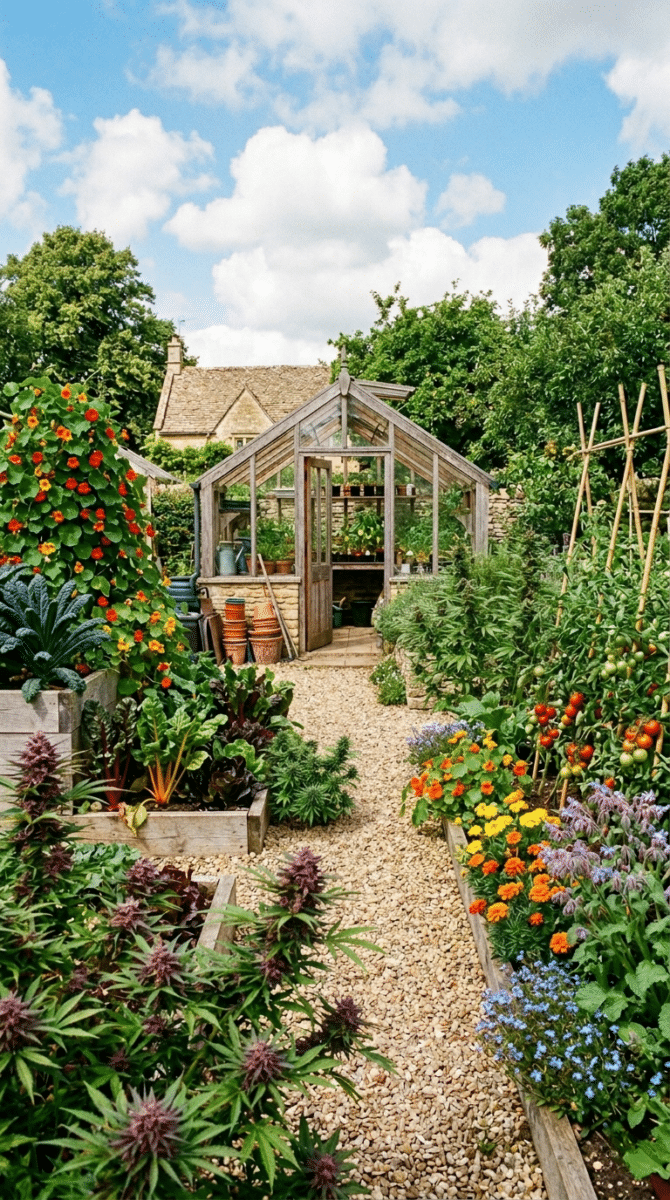
- Companion planting is the main tool. Flowering herbs and plants like yarrow, dill, and alyssum draw in and support the ladybugs, lacewings, hoverflies, and parasitic wasps that prey on aphids, caterpillars, and other pests.
- Diversity over monoculture. A plot surrounded only by cannabis gives beneficials little to feed on between pest outbreaks. Mixed plantings nearby give them a reason to establish and stay.
- Give them habitat. A brush pile, a small water source, or a strip of flowering plants nearby all help native beneficial populations take hold.
Protecting the beneficials you have attracted matters just as much as attracting them. Broad-spectrum organic sprays like pyrethrins will kill the native predators your garden has spent all season building up.
- Avoid spraying broad-spectrum products on or near companion plantings that are hosting beneficial insects.
- Btk is one of the few organic options safe around most beneficial insects, since it targets caterpillars specifically.
- If you must spray something broad spectrum, target it narrowly to the affected plant rather than the whole garden.
Organic Sprays and What to Watch For
Reach for a spray when the situation calls for it, and stick to products that are actually OMRI listed for organic production. The most common:
- Insecticidal soap: contact-only, breaks down quickly, one of the gentler options around beneficials. Good against aphids and spider mites.
- Btk: targeted at caterpillars and budworms specifically, safe around most beneficial insects.
- Potassium bicarbonate or Citric Acid based spray: an organic contact option for powdery mildew.
- Athena’s IPM spray: a botanical essential-oil spray useful as a contact treatment on soft-bodied pests like aphids and on powdery mildew, and a convenient all-in-one option to keep on hand.
Outdoor application adds two extra considerations. Drift can carry spray onto neighboring plants, gardens, or companion plantings you are relying on for beneficial insects, so spray on calm days and avoid wide-radius products near anything you want to protect. Rain wash-off means a spray applied right before a storm may do little good and simply end up in the surrounding soil instead, so check the forecast before applying anything.
A few products deserve extra caution even though they are OMRI listed. Pyrethrins and spinosad are both approved for organic production, but cannabis is smoked or vaporized rather than eaten, and most states test finished flower for pesticide residue with tolerances far stricter than what these products were originally cleared for on food crops. Oregon has issued public health recalls after cannabis batches tested with spinosad residue far above the state’s action level, and states including California and New York enforce strict low-tolerance limits on pyrethrins specifically because of inhalation risk. This does not mean these products are banned everywhere, but it does mean timing matters enormously outdoors especially, since a late-season application has less time to break down before harvest. If you use either one, apply it early in the season, never in late flower, and give the product plenty of time to break down before harvest. If you are unsure, lean on the gentler options above.
Scouting: Catching Problems Early
The single biggest factor in how much a pest or disease costs you is how early you catch it. Whatever you are treating right now would have been easier to handle a week earlier, and that is the real lesson to carry forward.
Walk your plants regularly, especially after a stretch of rain or a warm humid spell, since that is when outdoor pest and disease pressure spikes fastest. Check the undersides of leaves and the densest parts of the canopy. A cheap jeweler’s loupe is enough to catch mites and early mildew before they are visible to the naked eye. And when you see one small speck of powdery mildew or a single aphid, treat it as your cue to act, not as a data point to keep watching. A single spot today can be a colonized leaf next week and a lost cola the week after.
Preventing the Next Outbreak: Soil and Site
Once you have treated the immediate problem, this is how you keep it from happening again. Outdoor prevention starts in the soil and the site itself.
- Soil health. Living, biologically active soil grows plants that are naturally more resistant to pests and disease. Compost, cover cropping, and avoiding synthetic inputs all support the soil food web that makes this possible.
- Site selection and spacing. Choose a spot with good morning sun to dry off dew quickly and enough airflow to keep humidity from pooling in the canopy. Overcrowded plants are more vulnerable to both pests and fungal disease.
- Sanitation. Remove dead or decomposing plant material from around the base of your plants, since it can harbor fungal spores and pests over the season.
- Watch the weather. A stretch of rain or a period of high humidity is when disease pressure rises fastest outdoors. Scout more often during and right after those stretches.
Building a Resilient Garden Ecosystem
Attracting beneficial insects is one piece of a larger idea: outdoor growing lets you build a garden that does some of the pest and disease work for you, which indoor and greenhouse growers cannot do.
- Think beyond your cannabis plants. The health of the whole garden around your plants determines how much natural pest control you get. A diverse, thriving planting supports a deeper bench of predators and pollinators than an isolated cannabis plot.
- Avoid broad-spectrum sprays across the garden, not just on your cannabis, since wiping out pests in a neighboring bed also wipes out the beneficial populations you are relying on.
- Let some balance exist. A garden with zero pests also has nothing to feed the predators that keep outbreaks in check. The goal is a manageable equilibrium, not total elimination, so that beneficials have a reason to stay.
The Bigger Picture: IPM
Everything above is really one approach, called integrated pest management, or IPM. The idea is that you treat problems with the least disruptive effective tool, you catch them early through regular scouting, and you build soil and garden conditions that make problems less likely at all. Professional growers rely on it because spraying is costly and carries real risk to the final product. As a home grower, the more you shift from reacting to preventing, the less often you will find yourself back at the top of this guide.
FAQ
How do I get rid of spider mites on outdoor cannabis organically? Spray insecticidal soap on the undersides of leaves, repeating every few days to catch newly hatched mites, and keep plants healthy and unstressed since mites target stressed plants. Outdoors, most beneficial insects are best attracted through companion planting rather than released, but spider mites are the one exception where releasing predatory mites for an active infestation can be worth it.
What causes powdery mildew on cannabis, and how do I stop it? Powdery mildew thrives in humid conditions with poor airflow. Remove affected leaves, treat with potassium bicarbonate on contact, and improve spacing and airflow. Acting on the first spot rather than waiting is your best defense.
How do I keep caterpillars and budworms off my outdoor cannabis? Treat with Btk, which targets caterpillars specifically and is safe around beneficial insects, scout buds regularly for chew holes and frass, and support parasitic wasps through companion planting.
What plants attract beneficial insects for outdoor cannabis growing? Flowering herbs and plants like yarrow, dill, and alyssum attract and support predatory and parasitic insects that help control pests naturally throughout the season.
Is spinosad safe for cannabis? Spinosad is OMRI listed for organic production, but several states enforce strict residue action levels on cannabis flower because it is inhaled rather than eaten. Apply it early in the season and avoid use in late flower.
How do I keep beneficial insects around while using organic sprays outdoors? Avoid broad-spectrum products like pyrethrins near companion plantings hosting beneficial insects, and spray narrowly rather than across the whole garden. Btk is one of the few organic sprays generally safe to use alongside most beneficial insect species.
Ready to start your next outdoor grow with genetics bred for real outdoor conditions? Browse our full seed catalog.
We have a video series with cannabis content creator Catherine Goldberg, aka Senior Savvy Cannabis, where we guide her through her first indoor grow. If you are a new grower, you might find the videos helpful. Watch the grow videos →