
Author: Matt Spitzer | Updated September 2026
There’s no single best soil for cannabis. Growers get great results in small pots, big pots, raised beds, and straight in the ground, using dozens of different soil blends, and some people swear by one exact recipe and won’t touch anything else. Instead of chasing a specific product, it helps more to understand the fundamentals that make any soil work: good drainage, good water retention, the right pot size, and a pH your plants can actually feed in.
If you haven’t picked your seeds yet, start here — it’ll shape which setup makes sense. Match your plant type and size to your pot size and setup. This guide covers those fundamentals. If you’d rather skip straight to the specific potting mixes, pots, and amendments we use ourselves, check out our growing gear page.
Quick Answer
- Good soil needs both drainage and water retention, not just one or the other.
- Growing organically? Use more soil volume. It gives microbes more room to work and makes the whole grow more forgiving.
- Ground, raised bed, small pot, big pot: all of it works. Experiment and find what fits your space.
- Outdoors in 3 gallons or less, plan on watering multiple times a day, and expect a harder time running organic fertilizer alone.
- Pay attention to how your soil dries out between waterings. Fungus gnats usually mean it’s staying too wet for too long.
- Keep your soil pH in the 6.0 to 6.5 range so nutrients stay available to the plant.
- Germinate in a seed starting soil, not your regular grow mix.
Table of Contents
- What makes good soil
- Common amendments and what they do
- Soil volume and organic growing
- Containers, raised beds, or in the ground
- Small pots outdoors
- Reading your soil moisture
- What about pH
- Soil for germination
- FAQ
What Makes Good Soil
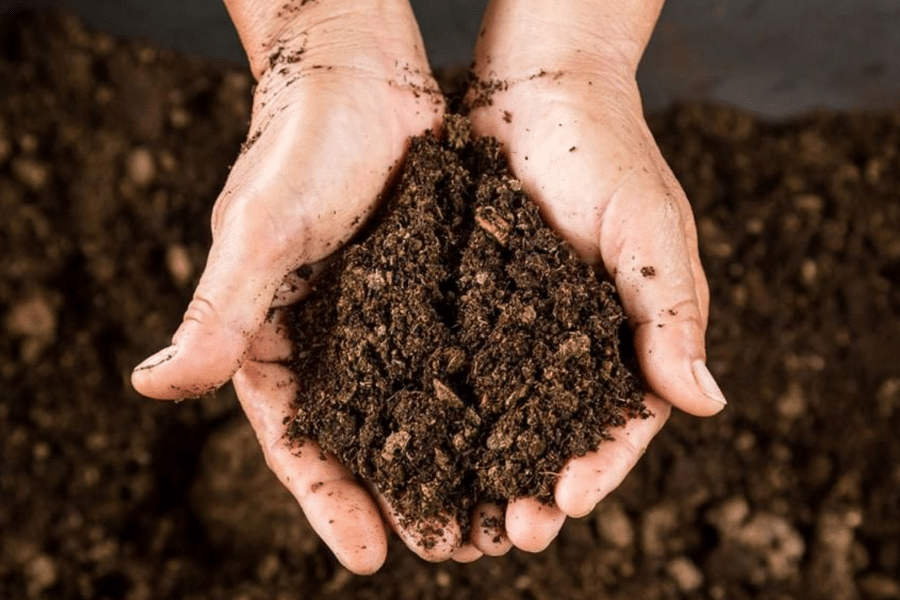
Good cannabis soil comes down to two things working together: drainage and water retention. That sounds contradictory, but it isn’t. Soil needs to drain off extra water so roots aren’t sitting wet, since waterlogged roots lose access to oxygen and are prone to root rot. At the same time, soil needs to hold enough moisture between waterings that plants aren’t drying out and stressing. Soil that only drains dries out too fast and has you watering constantly. Soil that only holds water gets waterlogged.
Two more things sit underneath those. The first is aeration, the air space between soil particles. Even soil that technically drains can suffocate roots if it’s too dense or compacted, so you want a light, loose texture roots can push through. The second is enough structure for soil microbes to live in and process nutrients. Every blend that works for cannabis, whether it’s a bagged potting mix, coco coir, or something you mix by hand, is really just a balance of drainage, retention, aeration, and biology. That’s also why you should never use straight topsoil or garden soil in a container. It compacts, suffocates roots, and drains poorly. A proper potting mix or soilless medium is built to avoid exactly that. For more on how often and how much to water once your soil is dialed in, see our guide on cannabis water needs.
Common Amendments and What They Do
You don’t need a shopping list of specialty products, but it helps to know the handful of amendments that actually adjust the properties above. These are material categories, not brands, and any of them can be mixed into a base soil.
Perlite is lightweight volcanic pellets that add drainage and aeration. Stirring 20 to 30% into a dense mix is the cheapest, most effective upgrade a home grower can make. Pumice does the same job and is better for in-ground planting because it stays put instead of floating to the surface over time. Worm castings and compost work the other direction, adding water retention, slow-release nutrients, and the microbial life that organic growing depends on. Coco coir mixed into a heavy soil lightens the texture and improves drainage without stripping out nutrients. Skip the exotic enzyme blends and bottled tea products until your fundamentals are dialed in. A well-built base with perlite and worm castings outperforms an expensive specialty product almost every time. The specific products we reach for are on our growing gear page.
Soil Volume and Organic Growing
How much soil volume matters depends on how you plan to feed your plants. If you’re feeding with liquid nutrients mixed into your water, volume is a smaller factor because you’re controlling nutrition directly at every feed. If you’re growing organically, feeding the soil so the soil feeds the plant, volume matters a lot more. More soil volume means more room for microbes to break down organic matter and keep nutrients available over time. It also buffers mistakes: a bigger volume of soil is more forgiving of a missed watering or an amendment that runs a little hot. If you’re planning an organic or living soil grow, lean toward the larger end of whatever pot size you’re considering. Our fertilizer guide walks through the organic versus salt-based decision in more detail.
Containers, Raised Beds, or In the Ground: Experiment
Cannabis doesn’t demand one setup. Growers get excellent results in the ground, in raised beds, in small containers, and in big containers, indoors and outdoors alike. If you want to try one of these, try it. A small pot on a balcony, a raised bed in the backyard, straight into amended native ground soil: they all work, and the differences mostly come down to trade-offs in watering frequency and how much you need to intervene, not whether the plant can thrive there. In-ground and raised beds tend to produce the largest outdoor plants because roots have unlimited room, while containers give you more control and let you move plants around. Part of the enjoyment of growing is finding the format that fits your space and how much attention you want to give it, so don’t be afraid to experiment and have fun with it.
Small Pots Outdoors
One trade-off worth knowing up front: growing outdoors in 3 gallons or less means watering multiple times a day once plants size up, especially in hot weather. Small pots dry out fast, and outdoor heat and wind pull moisture out even faster than they would indoors. You’ll also have a tougher time running straight organic fertilizer in that small a volume, since there isn’t enough soil for the microbial activity that slow-release organic amendments depend on. If you want to grow organically outdoors, a larger container makes life much easier. If you’re committed to a small pot, a salt-based feeding approach will likely be more practical for you.
Often you will be growing autoflowers in pots outdoors so it’s important to design a fertilizer plan that matches your pot size and growing location.
Reading Your Soil Moisture
No matter what soil or container you land on, pay attention to how it dries out between waterings. That single habit prevents more problems than almost anything else. If you start noticing fungus gnats, small flies hovering around the soil surface, that’s usually a sign your soil is staying too wet for too long. Let it dry out more between waterings. Fungus gnat larvae feed on fungus that thrives in consistently damp soil, so letting the top inch or two dry out between waterings removes the conditions they need to spread. If you’re not sure what you’re looking at, our pest ID tool can help confirm it.
What About pH
Even a perfectly balanced soil fails if the pH drifts out of range. pH measures how acidic or alkaline your soil is on a 0 to 14 scale, and cannabis in soil feeds best between 6.0 and 6.5. In coco coir, target slightly lower, around 5.8 to 6.2. When pH sits outside that window, nutrients lock out: they’re physically present in the soil but the plant can’t absorb them, which shows up as yellowing leaves that get mistaken for a nutrient deficiency. Most U.S. tap water runs alkaline, often 7.0 to 8.0, so it’s worth checking what you’re feeding your plants. A pH meter and a bottle of pH Up and Down costs very little and saves a lot of guesswork. A well-built organic living soil buffers its own pH reasonably well, but if you’re feeding liquid nutrients, testing pH is not optional.
Soil for Germination
One place where it does pay to be specific: germination. Use a seed starting soil, not your regular potting mix or living soil blend, to get seeds going. Seed starting mixes are lighter and more consistent than a full-strength grow soil, which matters for a seed that doesn’t have a root system yet to handle anything dense or hot. Once your seedling has a few sets of true leaves, transplant it into whatever soil you’ve chosen for the rest of the grow. See our germination guide for the full process.
Thinking about growing but not sure what gear to buy? Check out this list of growing supplies we recommend.
FAQ
What’s the most important thing to look for in cannabis soil? A balance of drainage and water retention, with enough aeration that roots aren’t compacted. Soil that only does one of those causes problems, either constant watering or waterlogged roots.
Can I use regular potting soil for cannabis? Usually yes, as long as it’s light and well-draining. Avoid anything labeled topsoil or garden soil in containers, since those compact and suffocate roots. Add 20 to 30% perlite to any mix that feels dense.
What pH should cannabis soil be? Cannabis in soil grows best between 6.0 and 6.5, and in coco coir slightly lower at 5.8 to 6.2. Outside that range, nutrients lock out and the plant can’t absorb what’s already in the soil.
Does pot size affect what soil I should use? Yes, especially if you’re growing organically. Larger volumes give soil microbes more room to work and make the whole grow more forgiving. Smaller containers dry out faster and are harder to run on organic fertilizer alone.
Can I grow cannabis straight in the ground outdoors? Yes, and in-ground growing usually produces the largest outdoor plants. In-ground, raised beds, and containers of any size can all work well. It comes down to your space and how much watering and attention you want to put in.
Why do I have fungus gnats? Fungus gnats show up when soil stays wet for too long. Let your soil dry out more between waterings to remove the damp conditions their larvae need.
Do I need a different soil for germination? Yes. Use a seed starting soil rather than your regular grow mix. It’s lighter and more consistent, which is easier on a seed that doesn’t have roots established yet.
Is organic soil better than feeding with liquid nutrients? Neither is objectively better, they’re just different approaches. Organic growing feeds the soil and takes more volume to do well. Salt-based feeding gives you direct control over nutrition and works fine in smaller volumes. See our fertilizer guide for a full comparison.
If you’d rather skip the guesswork, check out the specific soils, pots, and amendments we use in our own grows on our growing gear page. Ready to plant? Browse our feminized seed catalog.
bout the Author

Matt, Co-Founder of Triangle Seeds – Matt has been growing plants commercially since 2013, starting with Endless Sun Farms before co-founding Triangle Seeds in 2017 alongside childhood friend Chase. Over more than a decade, Triangle Seeds has produced and sold over a million seeds to home growers and commercial growers.
We have a video series with cannabis content creator Catherine Goldberg, aka Senior Savvy Cannabis, where we guide her through her first indoor grow. If you are a new grower, you might find the videos helpful. Watch the grow videos →
This post contains affiliate links. As an Amazon Associate I earn from qualifying purchases.