
Author: Matt Spitzer | Updated August 2026
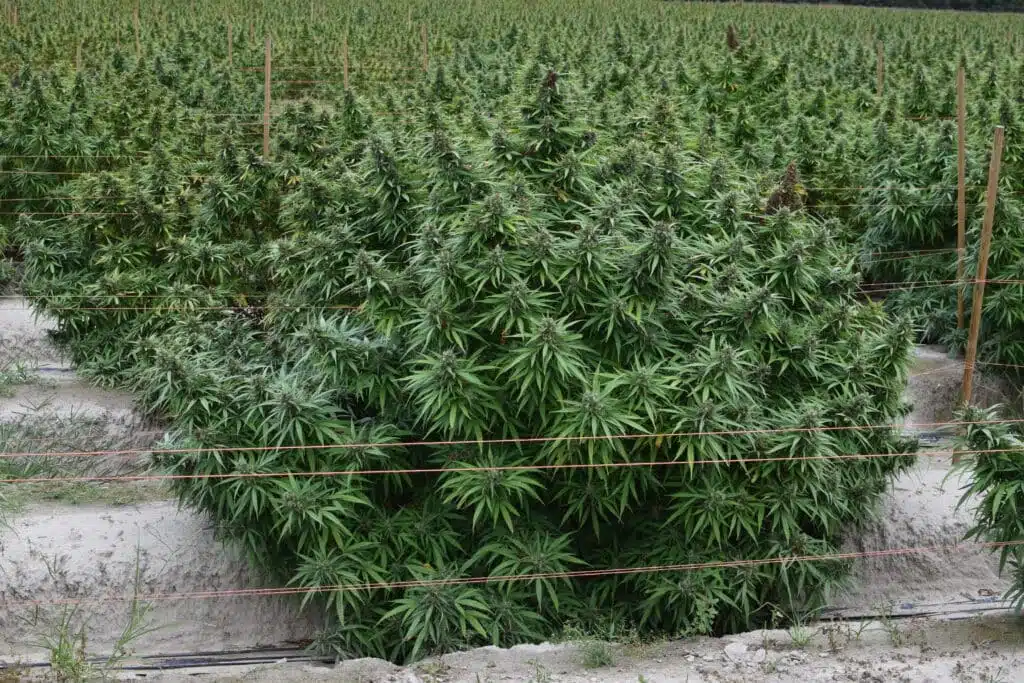
If you are growing cannabis outdoors, the plant is starting to notice the days getting shorter before you are, and it is about to shift everything it is doing underground and above it. What you feed it now, and how you feed it, depends less on a fixed schedule and more on how you are growing. This guide breaks fertilizing for flower into three real setups: living soil in the ground, a raised bed, or a large pot, an organic program in a smaller container, and a conventional salt-based granular program. For the basics of organic versus salt-based feeding in general, see our fertilizer guide.
Quick Answers
- Growing in the ground, a raised bed, or a large pot with organic amendments? Top dress once at the flip to flower with a slow-release organic bloom amendment or good quality compost, then let the soil biology do the work. You have more soil volume and thus more microbes to do the important working of converting organic material into nutrients for the plant. This means you don’t have to be as reliant on concentrated nutrients like you do with smaller pot sizes.
- Growing organic in a small pot, 7 gallons or less? At the beginning of flowering, top dress and scratch in an organic bloom fertilizer, like Girl Flower Power from Nature’s Living Soil. Lean on liquid organic feeds (fish emulsion, kelp, worm casting tea) if you start to see any signs of nutrient deficiency since they act faster and small containers have less buffer. Some yellowing on the very bottom leaves is ok in flowering as the plant does not need as much nitrogen in this phase.
- Feeding a salt-based granular like 10-10-10? Switch from 10-10-10 to a bloom-specific formula with lower nitrogen and higher phosphorus and potassium.
Table of Contents
- Why Flowering Changes What Your Plant Needs
- Find Your Track
- Track 1: In the Ground, Raised Beds, and Large Pots
- Track 2: Organic in Small Pots (7 Gallons or Less)
- Track 3: Conventional Salt-Based Granular
- When to Stop Feeding
- FAQ
Why Flowering Changes What Your Plant Needs
During vegetative growth, cannabis wants nitrogen to build leaves and stems. Once it flips to flower, energy shifts toward bud development, and the plant leans more on phosphorus and potassium while its nitrogen appetite drops off. Outdoors, in photoperiod strains this shift is triggered by shortening daylight rather than a date on a calendar, so the right time to change your feeding approach is when the plant starts responding to shorter days, not a fixed week number.
That said, how you act on this shift looks completely different depending on how you grow. A grower feeding biology in a raised bed has different tools and a different timeline than someone feeding a bottled 10-10-10 into a five gallon pot. That is why this guide splits into tracks instead of giving one schedule.
Find Your Track
- Planted in the ground, a raised bed, or a large pot (think 15 gallons or more), feeding organic amendments: go to Track 1.
- Growing organic in a smaller container, 7 gallons or less: go to Track 2.
- Feeding a bottled or bagged salt-based granular fertilizer, something like a 10-10-10 or similar all-purpose blend: go to Track 3.
If you are feeding a bottled synthetic nutrient line indoors on a set schedule, this guide is not really built for you. Your issues in flower are more likely to be about EC, pH, and environment than what to feed next, and that is a different conversation.
Track 1: In the Ground, Raised Beds, and Large Pots
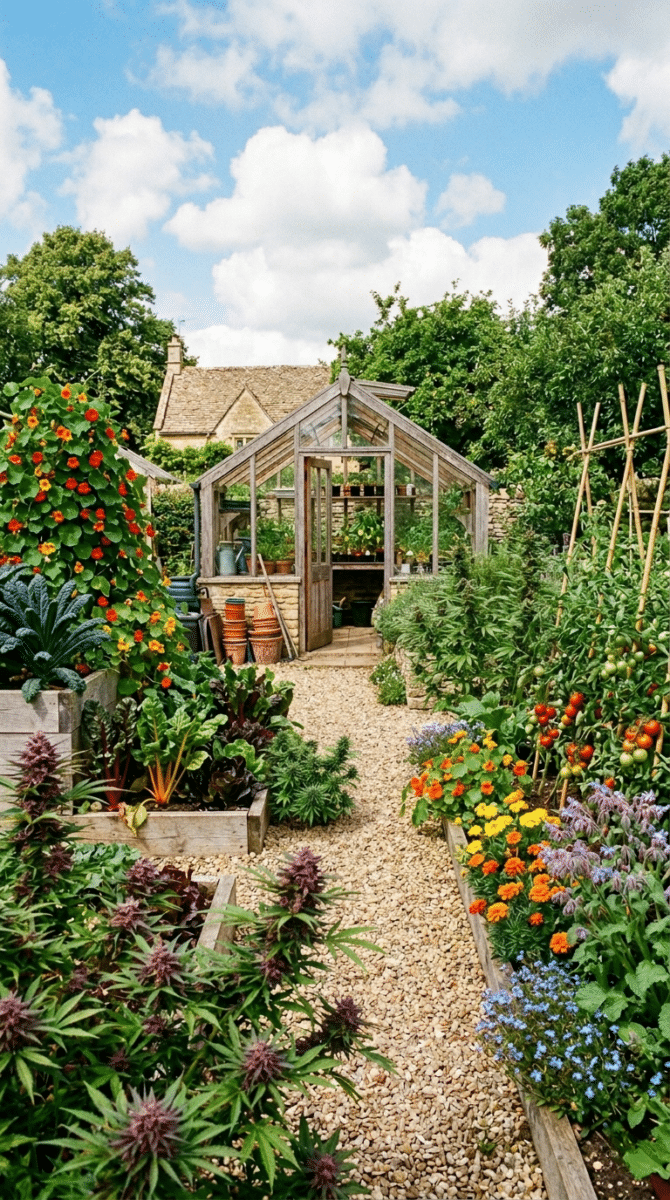
If you have a lot of soil volume and you are feeding organic amendments, you are not really managing nutrients directly. You are managing a soil ecosystem, and the microbes and fungi in that soil are what actually convert your amendments into something the plant can use, on their own timeline.
What to do at the flip to flower
Work a slow-release organic bloom amendment or good quality compost into the top few inches of soil once, then water it in. This is a low-risk default. Even if the plant is not desperate for it yet, a large volume of soil buffers against overfeeding in a way a small pot cannot.
Why you do not need to chase a number
A mature bed or large pot with soil that has had time to build biology (think a bed that has grown at least one prior season, or a large pot filled with a living soil mix) already has what it needs to feed the plant as it grows. That is the actual advantage of this approach over bottled feeding. You are not dosing a ratio, you are keeping the soil itself fed and letting it take care of the rest.
Where this breaks down
Mineralization, the process of microbes breaking amendments down into plant-available nutrients, takes time. Feed too late and the nutrients will not be ready when the plant needs them in mid to late flower. This is also why a first-year raised bed or a fresh bag of soil with no established biology needs more attention than a bed that has been building organic matter for a few seasons. Soil temperature and moisture also affect how active that biology is, so a cold, waterlogged spring bed will lag behind a bed that warmed up and dried out normally.
What to watch for
If you see real deficiency signs and not just normal lower leaf yellowing, an additional top dress or a liquid organic feed (fish emulsion or a kelp-based liquid) can act faster than another dry amendment, since dry amendments still need time to break down.
Products we reach for at this stage: Nature’s Living Soil Girl Flower Power for a bloom-stage boost, or Organic Plant-Tone as an all-purpose top dress. Both are on our growing gear page along with what we use for germination through post harvest.
Track 2: Organic in Small Pots (7 Gallons or Less)
The philosophy is the same as Track 1. You are still feeding biology, not the plant directly. But a smaller volume of soil changes the practical advice in a few real ways.
Why small pots are different
- Less soil means less room to absorb a mistake. Amendments get used up and nutrients wash out through watering much faster than in a raised bed.
- There is less room for a stable microbial community to establish. A raised bed can build biology over multiple seasons. A pot largely resets each grow.
- Small pots need more frequent watering, especially outdoors in summer heat, and frequent watering leaches nutrients out the bottom.
- As roots fill the pot later in flower, the ratio of soil to root mass drops right when the plant’s demand is highest.
What to do differently
- Plan for multiple top dress applications of a bloom fertilizer or liquid feed partway through flower, rather than expecting one pre-flower feeding to carry the plant for six to eight weeks the way it might in a raised bed.
- Lean more on liquid organic feeds. Fish emulsion, diluted kelp extract, or worm casting tea act faster than granular amendments, which matters more in a small pot where you have less runway between a deficiency showing up and it becoming a real problem.
- When you do top dress, scratch it in to the top layer of soil and water it in with a light, repeated watering rather than a single heavy soak, so the nutrients actually migrate down into the root zone instead of sitting on the surface.
What to watch for
Expect nutrient stress to show up faster in a small pot than in a raised bed, and expect it to need a faster response. If you think you are having a nutrient issue, just reach out to us and we will try to help you find a solution.
Products we reach for at this stage: Nature’s Living Soil Girl Flower Power is specifically built for small pots that need a boost in flower. Just make sure to add this early and often in flowering. Full list on our growing gear page.
Track 3: Conventional Salt-Based Granular
If you have been feeding a balanced granular like 10-10-10 through veg, the biggest thing to know going into flower is that 10-10-10 is a vegetative ratio, not a flowering one. Continuing to feed it through flower is one of the most common mistakes outdoor growers make, because it keeps nitrogen too high right when the plant wants to shift energy into bud development instead of leaf and stem growth.
What to do at the flip to flower
Switch off the balanced granular to a bloom-specific formula with a lower first number and a higher second and third number, something in the range of a 5-10-10 or a product labeled for bloom or flowering.
Why salt-based feeding behaves differently than organic
Salt-based nutrients are ready for the plant to use the moment you water them in. There is no waiting on microbes to break anything down first, so feeding is closer to real time cause and effect than organic feeding. That is an advantage for correcting problems quickly, but it also means overfeeding shows up faster and harder, since synthetic salts are not buffered by soil biology the way organic amendments are.
The real long-term risk: salt buildup
Repeated feeding leaves mineral salts behind in the soil that the plant does not fully use. Over time this causes nutrient lockout, where the roots cannot properly take up water or nutrients even though plenty of fertilizer is technically present in the soil. A visible white or light crust on the soil surface is a sign this is starting to happen.
What to do about it
- If you see salt crust on the soil surface mid-cycle, a plain water flush can help reset things.
- Plan a plain water flush in the final one to two weeks before harvest regardless of what the plant looks like. Unflushed salt residue is a bigger contributor to harsh-tasting smoke than leftover organic residue is.
What to watch for
Overfeeding on a granular program tends to show up as crispy yellow or brown leaf tips, leaves clawing or curling downward, or leaves that stay unusually dark green with weak bud swell, a sign nitrogen is still too high. Underfeeding looks different: pale yellowing that starts low on the plant and works upward gradually, with weak overall vigor.
Products we reach for at this stage: GH Maxi Grow, Bloom and Kool Bloom is a reliable budget option built for exactly this switch. Pair any salt-based program with a pH meter and pH Up and Down, since drift is the most common reason a correctly dosed feed still causes problems. Full list on our growing gear page.
When to Stop Feeding
Across all three tracks, stop most feeding in the final one to two weeks before harvest. Inputs applied this late will not finish converting or being absorbed in time to matter, and they mostly just add harshness to the finished flower. This is also when a plain water flush matters most for salt-based growers specifically, since unflushed mineral residue is a bigger factor in harsh smoke than leftover organic matter.
FAQ
Do I need to test my soil before flowering outdoors? It helps but is not required. A basic pH test is worth doing if you have never checked it, since pH problems get mistaken for nutrient deficiencies constantly. See our pH guide for target ranges by medium. Full NPK soil testing is useful but most home growers do fine reading the plant instead, using the checkpoints in this guide.
Is flushing necessary for organic grows? Less critical than for salt-based grows, since organic amendments do not build up the same mineral salt residue. Many organic growers skip a hard flush entirely and just stop feeding in the final weeks.
My plant looks fine, do I still need to feed it in flower? Not necessarily. If a plant in a raised bed or large pot looks healthy and vigorous with no signs from the list above, it may not need anything beyond the initial flip-to-flower top dress. Feeding a plant that shows no need for it is more likely to cause problems than help.
What if I am growing autoflowers outdoors? The same principles apply, but autoflowers move through their life cycle faster and do not respond to daylight changes the way photoperiod plants do. Watch the plant’s own stage rather than the calendar, and be more conservative with any late-flower feeding since there is a shorter runway to correct a mistake.
Ready to get your seeds in the ground for a strong finish this season? Shop our full lineup of feminized and autoflower seeds.
About the Author

Matt, Co-Founder of Triangle Seeds — Matt has been growing commercially since 2013 alongside co-founder Chase. Over a decade, Triangle Seeds has sold over a million seeds to home growers and hemp farmers across the US. We ship nationwide. Call/text (919) 410-6945. Learn more
We have a video series with cannabis content creator Catherine Goldberg, aka Senior Savvy Cannabis, where we guide her through her first indoor grow. If you are a new grower, you might find the videos helpful. Watch the grow videos →