
Author: Matt Spitzer | Updated October 2026
The best time to prepare your outdoor cannabis garden for next season is this fall, not next spring. Lime, compost, and cover crops need months to work, and a soil test taken now comes back while there is still time to act on it. If your plants are still finishing, you can start most of this today, and our guide on when to harvest cannabis will help you time the end of the season. Everything below applies whether you grow in native ground, raised beds, or a living soil bed you have built up over the years.
Fall Prep Checklist
For more on any item, click the matching link in the table of contents below. The numbers line up, so item 3 here is section 3 there.
- If plants are still in the ground, check them for bud rot after every rain and harvest early if it spreads.
- Take a soil test now, even with plants still standing.
- Apply lime and slow-acting amendments in the fall so they have months to break down.
- Sow cereal rye or mulch with shredded leaves so no soil sits bare over winter.
- After harvest, cut stalks at the soil line and bag or burn anything that was diseased.
- Sheet mulch new beds now so they are ready to plant in spring.
- Drain irrigation lines and pumps before the first hard freeze.
- Write down how this season went and plan where each crop goes next year.
- Choose and order seeds over the winter, starting with varieties that finish before your fall rains.
Table of Contents
- If Your Plants Are Still in the Ground
- Test Your Soil Before You Add Anything
- Add Lime and Slow Amendments in the Fall
- Plant a Cover Crop or Mulch Bare Soil
- Clean Up Plant Debris After Harvest
- Build New Beds Without Tilling
- Winterize Irrigation and Tools
- Write Down What Happened This Season
- Plan Your Genetics and Order Seeds Early
- Frequently Asked Questions
If Your Plants Are Still in the Ground
Plenty of photoperiod plants are still finishing in October, especially in the Mid-Atlantic, Northeast, and Midwest. You do not have to wait for harvest to start getting ready for next year, but the plants come first.
Scout for bud rot before anything else. Bud rot (botrytis) starts inside dense buds and spreads fast in cool, wet weather. Check your biggest colas after every rain and every foggy morning. If you find it, cut the bud out an inch below the rot, bag it, and clean your hands and shears before touching another bud. Caterpillar damage is a common entry point, so look for frass inside bud sites too. Our post on caterpillars and budworms covers what to look for.
A light frost is not the emergency people think it is. In our experience, a light frost does not damage finished buds. The bigger risk is the moisture that comes with freeze and thaw cycles, which is exactly what botrytis needs. A hard freeze is different, so plan to harvest before one is forecast. Once your plants are down, our guide on how to dry and cure cannabis walks you through the next step.
While plants are standing, you can still:
- Take soil samples. Pull cores from the open soil between plants, not right against the stems. Results will be back around the time you finish harvesting.
- Broadcast cereal rye in the open soil around your plants. Farmers do this in standing crops all the time. Penn State Extension notes that broadcasting rye into standing soybeans in September is a workable way to establish it. Rake it in lightly and let fall rain do the rest. Keep it back from the base of the stems so you are not adding ground cover where airflow matters most.
- Surface-apply lime if a recent soil test called for it. Go light around established plants. The NC Department of Agriculture recommends no more than 50 pounds per 1,000 square feet at first when surface-applying around established plants, with the rest six months later.
Hold off on digging near roots, working in heavy compost, and feeding. A plant this deep into flowering cannot use more nitrogen, and root disturbance only adds stress while it finishes.
Test Your Soil Before You Add Anything
A soil test is the only way to know what your ground actually needs. Besides pH, it reports calcium, magnesium, potassium, phosphorus, and organic matter, so you can stop guessing at amendments. Fall is a good time to send one because labs are less busy than in spring, and most state extension labs charge only a few dollars per sample.
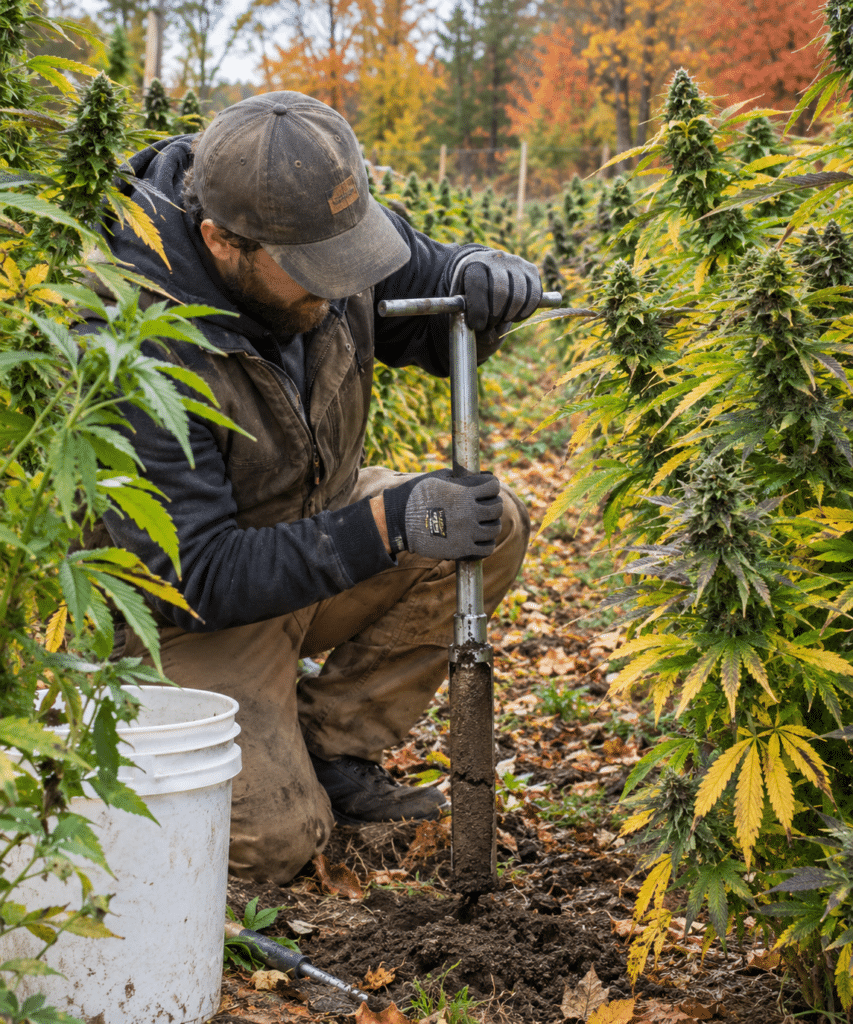
To take a good sample, pull 6 to 10 cores about 6 inches deep from across the bed, mix them in a clean bucket, let the soil air dry, and send the amount your lab asks for. If you have areas that have been managed differently, such as an old bed and newly opened ground, send a separate sample for each.
Do You Need to Worry About pH in Living Soil?
Less than in other systems, but not zero. In a well-built living soil with plenty of organic matter, the biology and the organic matter buffer pH swings, which is why living soil growers do not adjust the pH of their water the way bottled-nutrient growers do. Our cannabis pH guide goes into how that works.
That buffering works within a range, not at the extremes. Native ground soil can be far outside that range, and much of the East Coast is naturally acidic, sometimes down into the low 5s. At that level aluminum and manganese can reach toxic levels, phosphorus gets tied up, and the soil life you are counting on slows down. Compost will improve that over several years, but it will not take a soil from 5.2 to 6.5 in one season. Lime will, if it goes on months ahead.
Container and raised-bed living soil mixes are a different case. The pH was handled when the mix was built, usually by adding lime or oyster shell to peat, which is a big reason people say you do not have to worry about it.
How often to test:
- New ground: test before you add anything.
- An established bed that has been growing well: every two to three years is usually enough.
One more reason to test before amending: organic gardens that get heavy compost and manure year after year often build up far more phosphorus than plants need. It is a common problem and slow to undo.
Add Lime and Slow Amendments in the Fall
Lime is the main reason fall prep matters. It reacts slowly. The NC Department of Agriculture says pH changes show up within a couple of months, but the full effect takes 6 to 12 months. NC State Extension recommends applying it at least three months before planting. Lime put down in October has the whole winter to work. Lime put down in May mostly helps the following year.
Only lime if your test says to, and use the rate the report gives you. Over-liming pushes pH too high, and that is much harder to correct than low pH. Your report may also point you to a type. Dolomitic lime adds magnesium along with calcium, while calcitic lime is mostly calcium.
Fall is also the right time for other slow-acting amendments:
- Compost and aged manure to build organic matter.
- Rock dust for trace minerals.
- Gypsum if your test shows you need calcium but your pH is already where you want it, since gypsum adds calcium without raising pH.
In tilled ground, work amendments into the top few inches. In a no-till or living soil bed, spread them on the surface and cover them with mulch. Worms and soil life will pull them in over the winter.
Plant a Cover Crop or Mulch Bare Soil
Bare soil over winter loses structure, washes away in heavy rain, and fills in with weeds that will be ready to compete with you in spring. Keep it covered, either with a living cover crop or with mulch.
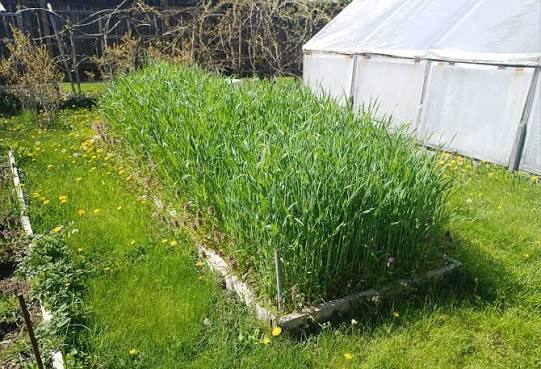
Cereal rye is the most forgiving choice this late in the year. According to Penn State Extension, it germinates at temperatures as low as 34 degrees F, its best seeding window runs from September to late October, and in warmer southern areas it can go in much later. It survives winter, holds the soil, chokes out winter weeds, and adds a lot of organic matter once you cut it down.
Hairy vetch and crimson clover add nitrogen to the soil, but they need to go in earlier, usually late summer, to get established before cold weather. If you missed that window, stick with rye this year and plan for a legume mix next fall.
In spring, cut the rye down a few weeks before you plan to transplant. You can mow it and cover it with a tarp, or crimp it flat and plant through the residue. Illinois Extension points out that rye will not die from freezing, so it has to be terminated before it goes to seed.
Too late to seed anything? Mulch. Run a mower over fallen leaves and spread them 3 to 4 inches deep, or use straw. Shredded leaves are free and break down into excellent organic matter by spring.
Clean Up Plant Debris After Harvest
Bud rot spores, powdery mildew, and pest eggs all spend the winter in dead plant material. Clearing it out after harvest is one of the cheapest ways to start next season with fewer problems.
- Healthy plants: chop the stalks and compost them. For roots, you have a choice. In a no-till or living soil bed, cut the plant at the soil line and leave the roots to break down in place. They feed soil life and leave channels for air and water. If you had root problems, pull the whole root ball.
- Diseased plants: bag them or burn them where that is allowed. Do not compost them. Most home compost piles do not get hot enough to reliably kill disease spores. Commercial outdoor farms burn stalks after harvest for the same reason, including to keep russet mites from overwintering.
- Fallen leaves and trim: rake them up from under where the plants stood, especially if you saw mildew this year.
- Stakes, cages, and trellis netting: clean them before you store them so you are not carrying last year’s spores into next year’s grow.
- Weeds: pull any that are setting seed now. One plant can drop hundreds of seeds into the bed you just cleaned.
Build New Beds Without Tilling
If you want more growing space next year, start the beds now. Sheet mulching turns lawn or a weedy patch into a plantable bed by spring with no tilling.
- Pick a spot with at least 6 hours of direct sun. Our outdoor cannabis growing guide covers site selection in more detail.
- Mow or flatten whatever is growing there.
- If your soil test called for lime, spread it now.
- Lay down plain brown cardboard with the tape removed, overlapping the edges by several inches, and soak it.
- Cover the cardboard with 2 to 3 inches of compost.
- Top that with 3 to 4 inches of shredded leaves or straw.
By spring, the grass underneath is dead, worms have moved in, and the cardboard has mostly broken down. Pull the mulch aside and plant into it.
Winterize Irrigation and Tools
Water left in drip lines, pumps, and timers freezes, expands, and cracks fittings. Do this before your first hard freeze:
- Open the end caps on drip lines and let them drain fully, or blow them out with air.
- Drain pumps, filters, and hoses, and store them out of the weather.
- Bring battery timers and controllers inside.
- Clean, sharpen, and oil your pruners and trimming scissors.
- Empty and clean fabric pots and grow bags, and let them dry before storing.
- Walk your fence line and fix anything the deer found this year.
Write Down What Happened This Season
You will not remember the details by April. Spend 20 minutes writing them down now:
- Which varieties finished first, and their harvest dates.
- Where and when bud rot, mildew, or pests showed up.
- Your first frost date and when the fall rains started.
- What you would plant again and what you would drop.
- Anything you would change about spacing, timing, or feeding.
Use those notes to plan your layout. If one bed had root problems or a heavy pest year, move cannabis somewhere else next season and give that bed a cover crop or a different crop for a year.
Plan Your Genetics and Order Seeds Early
For outdoor growers, finish time is often what decides how much of a harvest you keep. A variety that finishes in late September often avoids the wet weeks that wreck a variety finishing in late October. Use your notes from this year to set a target finish date, then pick varieties that land before it.
Our USDA hardiness zone map shows your frost dates by zip code, and our guide on when to start cannabis seeds outdoors lays out start and transplant timing by region. Photoperiod plants need the full outdoor season to finish. Autoflowers finish nine to twelve weeks from seed, so you can time them to come down before your fall rains start. Each has its own considerations, and we are happy to help you work through either.
Winter is also the best time to order. You will have time to plan, and your seeds will be ready to go when it is time to start them indoors in spring.
Frequently Asked Questions
When should I start preparing my garden for next season? Start in the fall, right after harvest or even before it. Lime and slow amendments need months to work, so fall applications are ready by spring planting.
Can I prepare my soil while my cannabis plants are still in the ground? Yes. You can take soil samples from between plants, broadcast cereal rye in the open soil, and surface-apply a light rate of lime. Hold off on digging, heavy compost, and feeding until after harvest.
Do I need to test pH in living soil? For a mature, well-built living soil bed, testing every two to three years is usually enough. For native ground soil you are opening up for the first time, test before you add anything, because organic matter cannot fix a very acidic soil in one season.
How long does lime take to work? pH starts to change within a couple of months, but lime takes 6 to 12 months to reach its full effect. Applying it in the fall gives it the winter to work before spring planting.
What is the best cover crop for a cannabis garden? Cereal rye is the most forgiving choice for a fall planting because it germinates in cold soil and survives winter. Hairy vetch and crimson clover add nitrogen but need to be planted earlier, usually by late summer.
Should I pull cannabis roots after harvest? In a no-till or living soil bed, cut the stalk at the soil line and leave healthy roots to break down in place. Pull the root ball if you had root rot or other root problems.
Can I compost cannabis plants after harvest? Compost healthy stalks and leaves. Bag or burn anything with bud rot, mildew, or pests, since most home compost piles do not get hot enough to reliably kill disease spores.
Planning next season’s grow? Browse our cannabis seeds and pick varieties that finish before your fall rains.

Matt, Co-Founder of Triangle Seeds — Matt has been growing commercially since 2013 alongside co-founder Chase. Over a decade, Triangle Seeds has sold over a million seeds to home growers and hemp farmers across the US. We ship nationwide. Call/text (919) 410-6945. Learn more
We have a video series with cannabis content creator Catherine Goldberg, aka Senior Savvy Cannabis, where we guide her through her first indoor grow. If you are a new grower, you might find the videos helpful. Watch the grow videos →